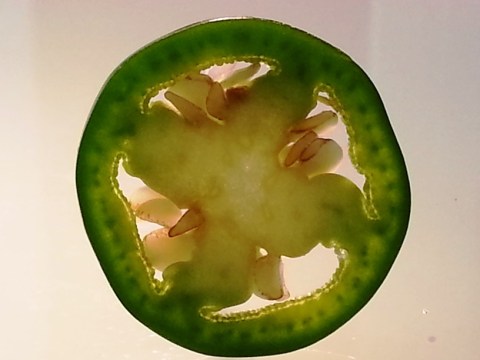
Samsung Galaxy S3 picture of Jalapeno slice.

My Amazing Smartphone Macro Camera

I have long been a fan of my smartphone camera, I remember when I first got it I was amazed by the quality of the pictures generally, but didn’t realise how brilliant the macro setting is.

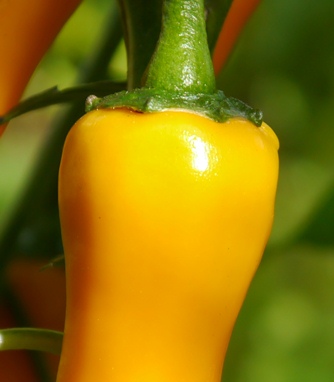
Smartphone MAcro Yellow Chilli Slice

Samsung Galaxy S3 Macro Chilli Picture

This picture and the one below are back-lit, but the camera is hand-held, such amazing detail. You can pick out the plant cells around the inside of the chilli and see the light shining through the vascular tubes.

Samsung Galaxy S3 picture of Jalapeno slice.

Samsung Galaxy S3 macro picture of Jalapeno slice.

My first and still my most appealing macro picture taken with my phone is quite an old one, and it did such a good job of illustrating how caterpillars munch away on chilli plants that I used it in my book. Again handheld, Samsung Galaxy S3, and with a moving target too.

Caterpillar eating chilli plant

Caterpillar Eating a Chilli Plant, taken with Samsung Galaxy S3 on Macro setting. From the book ‘Growing Chillies’

A few pictures from my book

I just realised there aren’t any nice pictures from my book on this blog, so here are a few to tempt you.

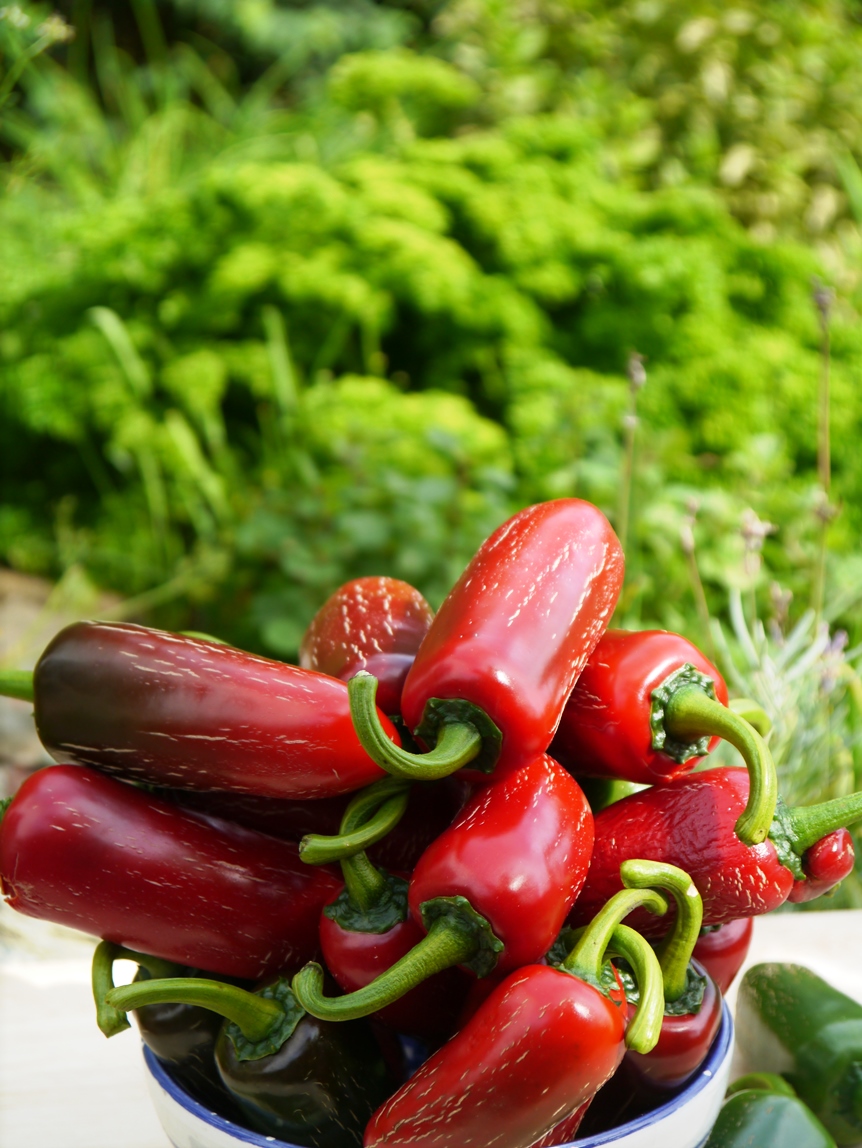
Jalapeno Chichimeca

Jalapeno Chichimeca


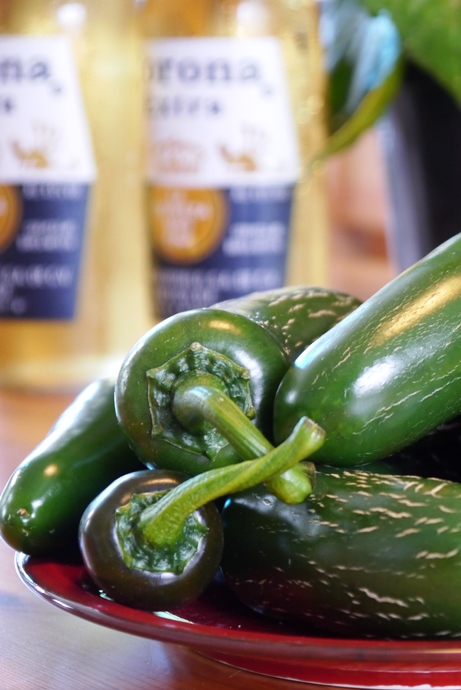
Jalapenos and Beer

Jalapenos and Beer

Mixed Habaneros

Mixed Habaneros

Bulgarian Carrot

Bulgarian Carrot

Khung Pao Cayenne

Khung Pao Cayenne


Sliced Jalapeno

Sliced Jalapeno


Oh, and one not so nice one.

Slug Eating Chilli

Slug Eating Chilli

.


Fungus Gnats (or Sciarid Flies)

I have never really had a problem with these before, occasionally I have seen them in chilli plants that are overwintered indoors, or other house plants. But mostly they tend to stick to indoor plants with old neglected soil.

For those that don’t know about them, they are a tiny black fly that hangs around the soil in a pot, you often don’t see them until you water it and they all fly up in a panic. Their even tinier grubs will be living in the soil, feeding on algae, rotting organic matter, and according to some experts but not others, the roots of your plant.

This year, however, I seem to have been inundated with them in the greenhouse. I think this is most likely due to the very mild winter. Where I live in South Devon we only had a couple of very light frosts, and the greenhouse never went below zero, hence poor sterilization of the soil. I had a couple of chilli plants out there which developed fungus gnats in their pots but I wasn’t too worried, normally they would die and be discarded before spring. I also had a bag of compost left over from the previous year which had a few in. I didn’t want to use it for potting so I dug it into the beds in the greenhouse. I foolishly thought the flies wouldn’t survive in natural soil because other bugs would kill them off. This was wrong, and before I knew it the beds were crawling, along with some other pots.

I am a big fan of biological controls, Nemaslug etc. and I urge people to use them whenever I can, but it is only recently that I have seen a control for Fungus Gnats. In my Growing Chillies book I deal with Fungus Gnats, but don’t mention a biological control for them as, at the time, there didn’t seem to be one available, hence this update. I have always used the old fashioned method of sticking a piece of potato in the soil which attracts the grubs and can later be discarded. Luckily now there is a biological control widely available, it is inexpensive, easy to use and very effective. It is microscopic nematode worms that infect the fly grubs. It comes as a light powdery substance in a small sealed tray. Dilute it in a watering can and water it into the soil of infected pots. It seems to me that the results are obvious within just a day or two. I suppose the grubs are infected almost immediately and the adults don’t live more than a day or two, so their life cycle is immediately halted.

This will be my first port of call in future, I might even order it as a matter of course every spring when I order my Nemaslug, you can get them shipped together from ‘all good purveyors biological controls’ I use www.greengardener.co.uk 

Aaaaaah – Flatworms!

This is part of my therapy, but I already get the feeling it isn’t going to work.

Warning, this article contains a lot of Flatworm information and a picture; reader beware.

Firstly I will say that I am not usually squeamish about creepy crawlies, in fact from a very early age I have chosen to seek them out. I was a keen amateur entomologist as a young teenager, and still am. I kept giant cockroaches as pets, and have always wanted to know what lies beneath rocks and stones.

Apart from one experience when I opened the lid of the compost heap and momentarily confused half an avocado skin with a giant slug I don’t remember being too repulsed by invertebrates, although a 7 inch giant centipede did run over my foot in Australia once, so I have a bit of a thing about those, and that is fair because they do bite.

One thing, however, that has always sent shivers down my spine is Flatworms, and flatworm-like things in general. Until last week my only experience of such creatures has been horror films, The X Files, and the like, in which they generally cause mayhem beyond what you would expect from the average squishy thing.

Oh, and I don’t like leeches either. There is a pattern emerging here, soft shiny wet things that are wider at one end than the other and move, sometimes quickly.

This therapy isn’t working.

Most gardeners have probably heard of the New Zealand Flatworm but have probably not experienced them, so their knowledge is limited to the fact that they are an unwanted import, they probably came to this country in the pots of imported Tree Ferns, and they are a pest we don’t want or need.

They have been around for a while, taking hold in the great gardens of Cornwall where Tree Ferns and similar plants thrive and Victorian enthusiasts built great collections of imported fora from around the globe.

So anyway, last week I was on my nightly slug hunt, the weather has warmed, though still damp and they are emerging ready to do damage. I was mooching round one of my new raised beds, scissors in hand, snipping the odd slug here and there. Suddenly something caught my eye, something out of place, and the beam of my head torch landed on a slippery orangy-yellow thing. I knew what it was instantly, luckily it wasn’t very big, maybe an inch and a half. But I winced and I could feel the blood rushing round my ears. Then there was another one, this time wriggling, wrestling with an earthworm.

This is what they do, they eat earthworms by digesting injecting them with a poison which dissolves their insides and then they suck out the juice.

This therapy definitely isn’t working.

The two worms were each snipped into four pieces, all of them still wriggling quickly. I hope all these 8 parts don’t carry on living, the consequences aren’t worth thinking about.

I took a picture and tweeted it, all the time trying  not to look and I hoped that someone might correct my misdiagnosis, but all I got was confirmation and one lady who put the final nail in the coffin of my Flatworm phobia. ‘They can escape from a sealed jam jar!’

I don’t know for sure if mine are New Zealand Flatworms, I never made a positive identification. I don’t want to look at any more pictures. There are also Australian Flatworms which, I imagine, are slightly larger, a bit more aggressive and in your face, and care a little bit less about the environment around them. I hope, at least, that mine are from New Zealand.

That night I had the worst nightmare I have ever had. A proper ‘you only ever see it in the movies’ type nightmare. I can’t go into the details of it but it involved lots of Flatworms, dozens of them, and huge, much like Indiana Jones in a pit of snakes, and I awoke with a proper scream. My wife thought I was dying.

My slug hunting expeditions have abated for a while. Hopefully my Nemaslug treatments, and general plant protection are doing their job. I think that the flatworms only live at the bottom of my garden where there is a strip, sheltered by a tall fence, that never sees the sun. This is where the compost area is and I think this is how the Flatworms came to be in my raised beds. The household compost goes in a big bin which is really a wormery  and when I built the beds I emptied all the bin into the bottom of the beds.

We have barely had a frost this winter, in fact where I live I suspect ‘This has been the warmest winter on record’ and I think this provides a perfect habitat for Flatworms to thrive.

Flatworms can’t tolerate frost, and luckily they can’t live in temperatures of over 20c, so maybe this summer and a cold winter will see them off. I don’t know where they came from, I have never brought plants imported from New Zealand, maybe my neighbour has, or maybe they are just gradually spreading. I don’t think Devon is the best place for them, although it is generally quite wet, things do dry out in the summer. From what I have read, (which is very little, as most internet articles are accompanied by photographs), I gather they prefer Scotland, where they escape frost by burrowing down, and enjoy constantly damp summers.

Worse has happened, yesterday my nightmare nearly came true. I was repairing a path along the bottom of the garden, in the shady area. I lifted the edge of some weed control stuff that lay under the path, and through a hole in it, from underneath, a bigger more orange Flatworm wriggled, half way out, fatter and the visible part was an inch and a half without what lurked beneath. I couldn’t kill it. Where else are they? In my wellies? around my radishes? In my hair? Aaaah.

This therapy hasn’t worked. The path is still unfinished and this article won’t be proof read so apologies for any errors. I don’t even know if Flatworms are one word or two, I’m not going to look it up and I anyway I can’t read this again, at least not for a while. I don’t expect others to read this anyway, it isn’t the sort of subject matter people go out of their way to find.


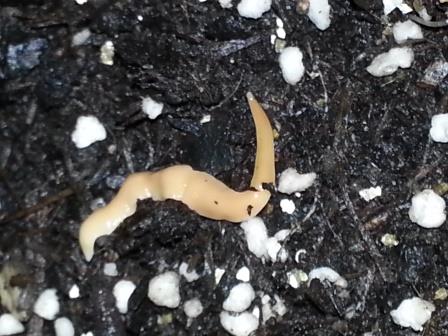
This is one of my flatworms, before it was chopped. I held my hand in the way of the picture while I was editing it, so I don’t even know if it looks OK. You decide.
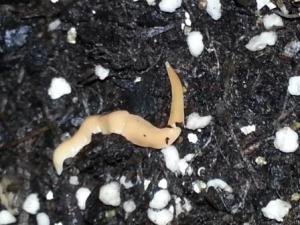
Flatworm
Flatworm


Do Horticultural Shows Need to Modernise?

I live in a village which holds an annual horticultural show, the likes of which you see in villages and towns all over the UK. Many years ago I used to participate, but when I became a professional grower I wasn’t allowed to compete any longer. Twelve years has passed and as I am now ‘retired’ from professional chilli growing I am eligible to compete again so recently one of the village elders gave me the application booklet, apparently these days they are struggling for participants. Why is this I wonder? With the boom in ‘grow your own’ that can’t have eluded anybody you would have thought there would be lots of eager takers.

Now I am probably not a typical veg grower, I lean towards the unusual, challenging or bizarre. I obviously grow lots of chillies and I don’t have huge amounts of space, so I mostly steer clear of potatoes and the bigger root vegetables. Even so I would say that from what I hear from my humble list of followers, and what I glean from the press, those that have recently taken to veg growing, and in particular younger growers are a little more Thai basil than turnip.

On my local show list there are 32 classes in the vegetable section, and I am currently growing , even if you count chillies as 1, 24 different vegetables or herbs and yet the overlap between the two is only 4, not including the ‘Any other vegetable’ and ‘Any other fruit’ classes. They have runner beans, I grow dwarf french beans, They have turnips, parsnips and beetroot, I have asparagus peas, mouse melons and aubergines. They have marrow, I have squash.

I know of another local show which, when some new organisers took over the reigns, did amend their class list slightly to reflect changes in taste, but this didn’t go down well with the traditionalists. If you have grown prize turnips for decades you might be slightly miffed if your category is culled to make way for’ Hot Pepper’ or ‘Ornamental gourd or squash’. I am interested to know whether anyone has opinions on this, and if so how should horticultural shows reflect changing trends? Some of them go back hundreds of years, with cherished cups presented in memorial to past members, so tradition stands in the way of modernisation. I am inclined to kick things off with an offer of a new cup to my local show for ‘Tropical or Oriental Vegetable’ or some such thing, but would that preclude me from winning it? I’m not too worried.


Light Levels, Lux and a Bright Sunny Window

For a change, the first part of today was clear, bright and sunny, and I was tinkering with a small chilli bonsai tree which currently lives in a little plastic Ikea mini greenhouse inside our patio doors.

It is doing ok, and this is by far the brightest place inside the house for a plant to spend the winter. But it’s situation led me to muse over how much light it was getting in it’s little greenhouse, in a window, in a house.

I wrote a paragraph or two in my Growing Chillies book on the subject of light levels and how brightness deteriorates very rapidly as you move away from a window, and how the human eye is so effective at compensating for this we don’t really know how cosiderable the change is. For a plant this can be the difference between life and death.

As an aside, a recent TV program on ‘The Body Clock’ had the presenter, Terry Wogan, playing around with a light meter to prove that to get a healthy dose of good quality light we need to be outside. A comfortable armchair by the window wasn’t enough to keep Terry’s body clock on the straight and narrow.

So today my inquisitive nature let me to reach for my light meter again. At this point I should say that my light meter is not as good as Terry Wogan’s. He had the bees knees I am sure, whereas I am stuck with my smartphone. But even though the Apps you can get to read light levels aren’t deemed accurate enough for real scientific study, they are still in the right ballpark, and enough for a little layman’s experiment.

I started by aligning my phone to the sun with the patio doors open, so there was nothing obscuring the view at all, the maxumum reading was about 80-85,000 lux. Lux is the unit of measurement for light. Great, that is pretty bright, a very sunny summer day might give you 120,000.

Then, without moving the phone, I closed the doors so that now the reading was taken from behind a double glazed window. The reading dropped to 38,000, less than half.

Then I moved to my little bonsai chilli plant, in it’s own little greenhouse, which added another thin layer of perspex to obscure the light. There the level dropped to 25,000 lux. Even though this little greenhouse sits not 8 inches from the outdoors, the light it receives is cut by more than 1/3rd. A quick trip out to my big single glazed glass greenhouse revealed a reading of 70,000.

How will this reduced light affect this plant and others that may be less lucky still? The first thing to remember is that this is very much a finger in the air experiment. I’m not going to win an honorary doctorate for my plant research here. Sunlight comprises of many of different types of light across the spectrum, infra red, through the visible colours to ultra violet and plants don’t need all of this, parts of spectral light are neessary and other parts aren’t. Sometimes glass is made to filter out some kinds of light but not others, and window glazing might do just that, so maybe it is filtering or reflecting some wavelengths of light but not others.

But what this experiment does illustrate is that the principle of light, regardless of it’s nature, diminishing rapidly with interference, is easy to prove. If you move further back into the room, away from the window and out of diret sunlight, the lux levels diminish into the hundreds very quickly, and a north facing window, even though it appeared bright, was less than 100 lux.

In summary my bonsai chilli is probably happy where it is, even though this spot isn’t perfect. At least it’s own personal greenhouse means tha cat can’t sit on it and on sunny days the light is adequate. But anywhere else in the house, and this goes for summer as well as winter, it probably isn’t going to do very well. It would reach for light and go straggly, the leaves will be pale green and it won’t get all the nourishment it needs from sunlight.

So the moral of this story is, and it particularly applies to chillies because they need high light levels, keep them right next to a south facing window, outdoors, or in a greenhouse if you can.

If you have a smartphone, try this experiment yourself. There are dedicated free light meter apps, or I have one called ‘GPS Status’ (Android) which does all sorts of gps stuff as well as light readings. The readings are exactly the same as ‘LuxMeter’, which implies they use the same internal module to take the readings.

Interesting, or not?

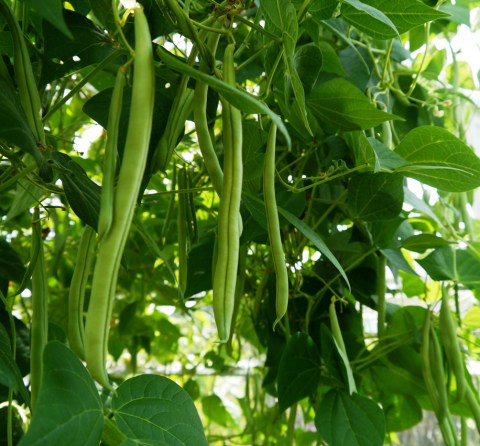
French Beans

Beans, Beans and More Beans

Well, so much for chillies, this post is all about helping me come to terms with my amazement at my bean plants.

I have grown beans before, a lot of them. I’m not keen on traditional runner beans, I find them all a bit tough and stringy and not a very versatile food to work with. But I have grown a lot of dwarf bean varieties, mainly the non climbing ones, sometimes some outside climbing ones, and normally with good results.

This year, however, I have, for the first time grown climbing beans inside the greenhouse, specifically Suttons ‘Blue Lake’ Climbing French Bean, and wow, what results.

They are still producing, more slowly at this time of year, (the clocks change in two days), but don’t think I have ever grown a food plant quite so prolific.

They were sown in early May, and soon planted out in the greenhouse bed, I was strict, and limited myselfl to 4 plants because of space, although in the end they did overwhelm a bit too much.

By early July they were producing, just a few each day at first, but quickly they got going and my half heated attempts at logging the weight of what was picked has told me that they have so far produced over 45lbs from 4 plants! Averaging roughly half a pound each and every day from mid July to late October.

Now who can possibly eat all this stuff? My wife was bowled over by the firsst couple of picks, there weren’t that many, and were treated as a delicacy, steamed and buttered, which prompted the comment
‘You can grow as many of these as you like, I could eat them every day.’
Roll on 7 days of exclusive bean eating and her response changed, didn’t want to see another bean, ever.

1680g of French Beans

Now, for me, one of the greatest joys of vegetable growing, next to eating them quick, seeing tiny seeds turn to dinner making machines, and getting stuff for free, is giving them away. So of the 45lbs of beans produced so far, most have been consumed by friends and neighbours. As mentioned previously, I do like something for free, so hopefully the favours will be returned with favours, odd jobs, party invites and wine, but the main pleasure is going a small way to feeding the masses for nothing, and seeing them happy too.

The techy stuff – germinate them in pots, somewhere warm, indoors in late March or early April, or later in the greenhouse.

Plant them out about a foot apart in a greenhouse bed. They will get big, bushy and rambling. They grew to the roof and along so put them at the back end where they won’t cast shadow over the rest of your doings.

I kept them well watered, especially on hot days, and fed them with tomato feed, along with most of my other stuff.

Pick them young, when they are about 5 inches long and before the beans inside start to fill out. Pick them frequently! At least every other day, to keep them producing.

Towards the end of the season pull of the bigger old leaves as they yellow to allow light in to combat mould.

Incidentally, I got into the habit of eating them raw, freshly picked, and they are very tasty, but apparently all ’round’ beans, as opposed to flat runner beans, are poisonous when eaten raw (remember the rules about cooking kidney beans thoroughly). Well Phaseolus vulgaris, the french bean, haricot bean, flageolet beans etc. etc. all have the same trait, as the beans develop they become more poisonous, untill the heat of cooking breaks the poison down. I had no problem, but go easy on eating them raw, especially if the bens have formed.

Pimiento de Padron

Pimiento de Padron, Growing, Picking, Cooking and Eating

I mentioned these in my book, but really they merit a bit more of a shout as they are quite a different thing to grow than your average chilli and well worth trying. In fact they are very addictive to anyone who has tried them. They originate from Spain, where they are popularly eaten as tapas.

There are two fundamental differences between these and pretty much any other chilli you might grow.

1/ They are cooked and eaten whole, and not just individually but by the plateful. They might be a bit hot, or maybe not, but they aren’t really eaten for the pain, just as a tasty snack. Eat everything except the stalk.

2/ They are picked immature and therefore they are quick and easy to grow, and they will continue cropping all season as the plant will keep on producing new fruit quicker than if they were left on the plant to mature.

With regard to cultivating them, they should be treated just as you would any other chilli, but bear in mind that they want to grow big, and I mean up to 5ft tall given the right growing conditions, so put them in a huge pot, or in a greenhouse bed.

If you can get a couple of plants to this size then they will give you a frying pan full every couple of days, but maybe grow 3 or 4 plants just in case. They can go outside in a god summer, like the one we have just had in the UK, but really they need to be in a greenhouse, conservatory or polytunnel.

Picking them – They are picked immature, this means while they are still soft and green, up to about 2 inches long, but don’t be afraid to picke them smaller. If you leave them on the plant they wil grow to about 3 or 4 inches long and get pretty hot, and eventually turn red. The idea is not to let them do this, or the plant will produce less while it puts it’s energies into filling out the bigger fruit.

Cooking them – Toss them around in a hot pan with some olive oil, faff around with them a bit so they don’t get too burnt on one side, but it is fine for them to blacken a bit, that is the idea. A sprinkle of salt is optional, but helps to bring out the flavour. Once they are done, (maybe a bit more than in the photo below). they are ready to eat, but don’t burn yourself by diving in too early.

Tradition says that one in 30 is a hot one. This isn’t a completely random thing though, and you can predict the heat to a certain extent. The heat in a chilli develops when the seeds and placenta, to which the seeds are attached, starts to form. This is where the nack is to picking them. Once they start to become nice and shiny, and become slightly firm, and crunch when you squeeze them, they will have some heat. When they are small and leathery, they won’t. The trick is to pick them at or around this time, you wil soon get the hang of it. In cooler conditions and going into the autumn they will not fill out as quickly, and you might end up with some small ones that are quite hot.

You should get hundreds off of one large bush in a season, so don’t be afraid to keep feeding them, there is no harm in always feeding them whenever you water them. Use liquid chilli plant food or tomato plant food. If the leaves start to turn pale then step up the feeding and you should get a good few months out of them.

You can buy the seeds from a number of the bigger seed merchants, but I have always used the Italian Franchi seeds, you get a lot in a packet.