Piri Piri

My Giant Piri Piri Plant

I have a soft spot for my Piri Piri plants.  I don’t grow everything every year, I  rotate other plants around and If I have a freezer full of something I might miss a year. It gives me a chance to try new varieties and keeps me interested but I will always have my Piri Piri. Partly this is because they are just the best for overwintering, and partly because they crop so amazingly in the second year.

Nobody sells the seed, my seeds come from my mother’s ‘mother plant’. She first collected the seeds about 20 years ago from a garden in Portugal, and has kept them growing ever since, she has a plant about 15 years old, though I have to say it is a bit ropy now. Because she keeps this one growing, and doesn’t grow anything else so the seed she collects is always true. If anyone wants seeds for a plant like mine I can give them some of hers.

As far as I’m concerned this is THE Piri Piri. There are lots of other chillies that look slightly different all over Africa (chillies were taken to Africa from South America by the Portuguese) that are given this name, but that is simply the name they give to a small hot red chilli, so while the name is the same, the chilli might vary. This is made worse by the fact that where chillies are grown for Piri Piri sauce, they tend to choose something that is quick growing and prolific, then brand it with the Piri Piri name afterwards.

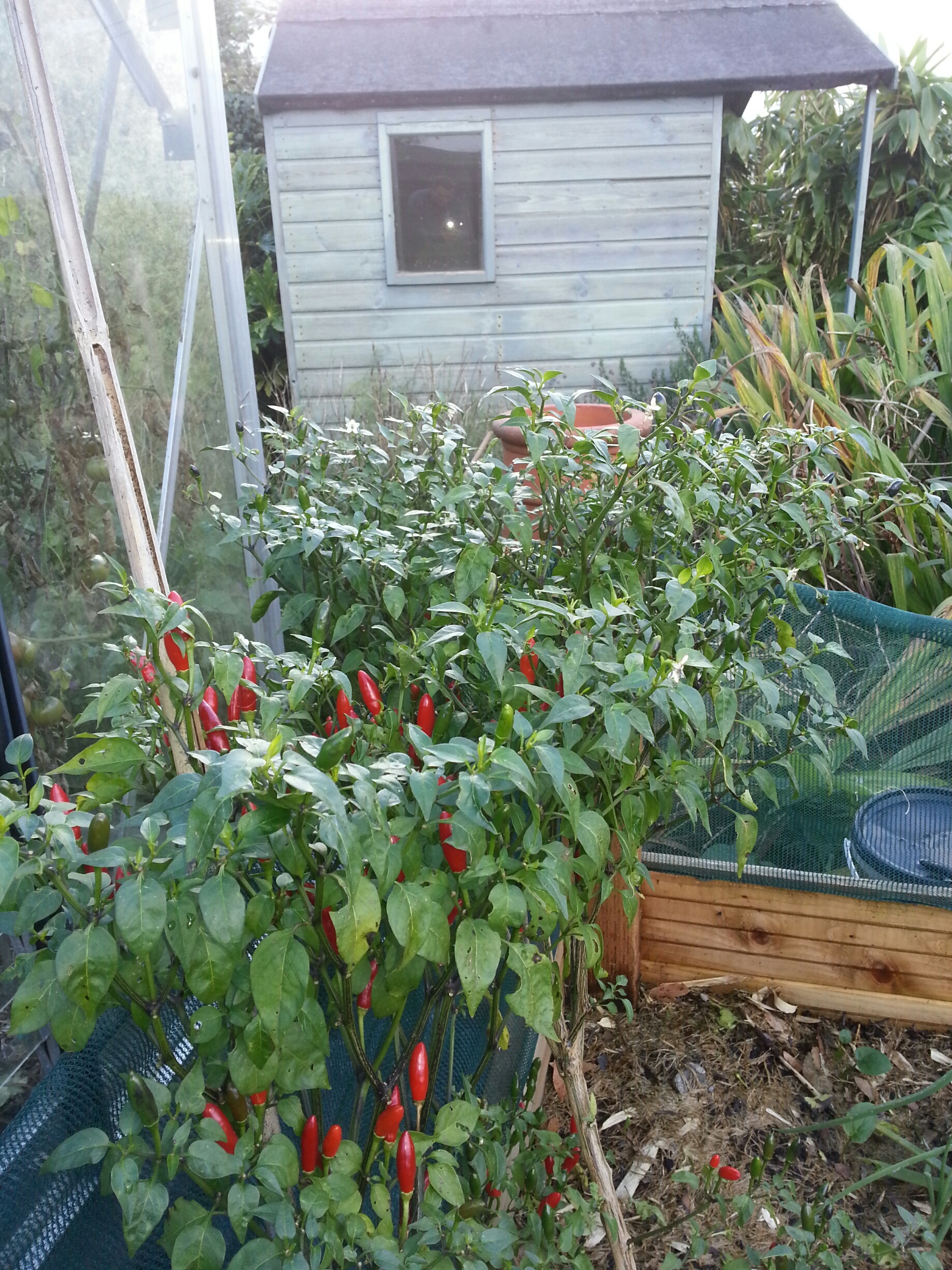
Anyway, back to my plant, the one below is now 5ft (1.5m) tall, and it will get bigger by the end of this year. It is a second year overwintered plant, last year it got to about 4ft (1.2m).

Piri Piri Plant

My 5ft Piri Piri Plant


These are great for overwintering. They are much more tolerant to cold temperatures than most capsicums, they will die back to stems, but this spent a few months last winter in a cool greenhouse with temperatures down to 0°c on a couple of nights. Last winter was a very mild one though (South Devon). Normally I wouldn’t expect plants to survive in the greenhouse, and nothing else that I left in there did.

Also, if frost hits in the autumn this one will survive where others don’t. According to my experiments nothing else will out-survive it apart from the tepin or Chiltepin, which are even more hardy, but pretty useless as a fruiting plant. This one pays dividends everywhere.

Piri Piri Flower

Piri Piri Flower

After winter it lays dormant for longer compared to other types. When I keep other plants they tend to start shooting out very soon after midwinter, and by early February they are shooting nicely. Not with this Piri Piri; maybe because the stems are quite woody, and it is a slow growing plant anyway,  you have to have faith and wait a bit longer, but it will catch up and still fruit earlier than first-year plants.

the chillies you pick will be pretty hot, I recon about 80-100,000 SHU, and off a big plant like this one I am expecting hundreds of them. They will be used for everything, dried, powdered, sauced and pickled.

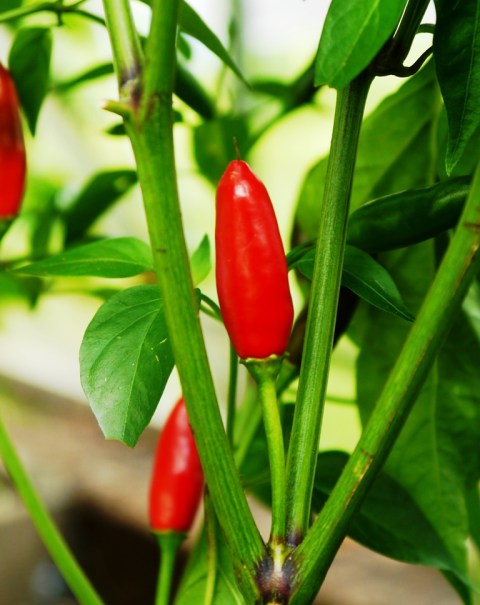
Piri Piri Green
Piri Piri Green

 

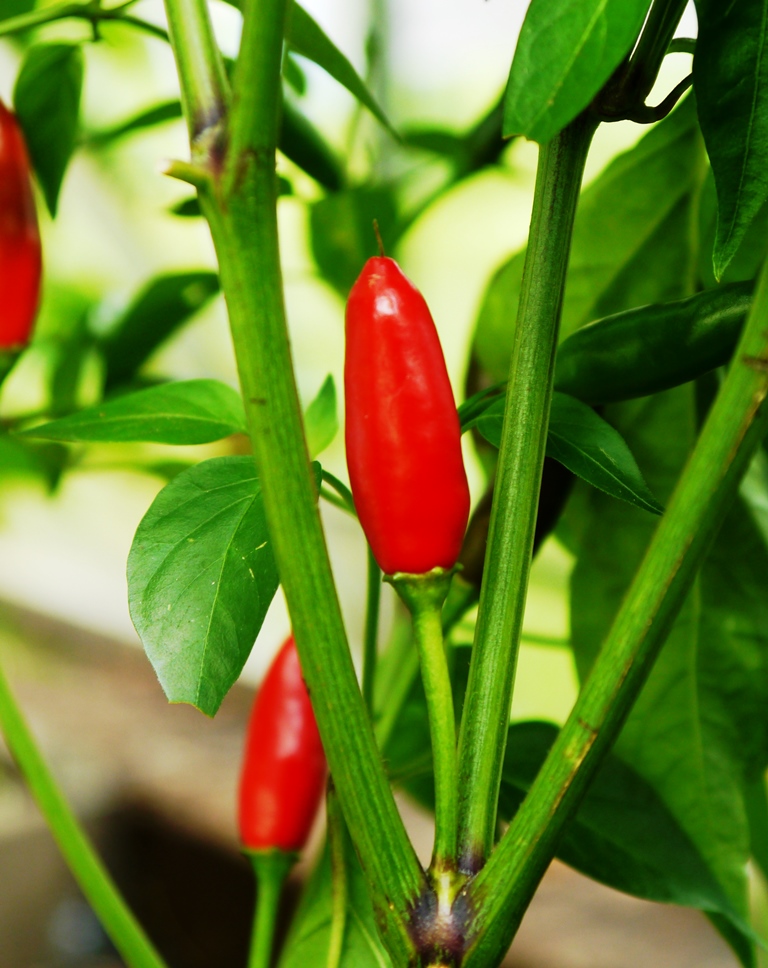
Piri Piri
Piri Piri


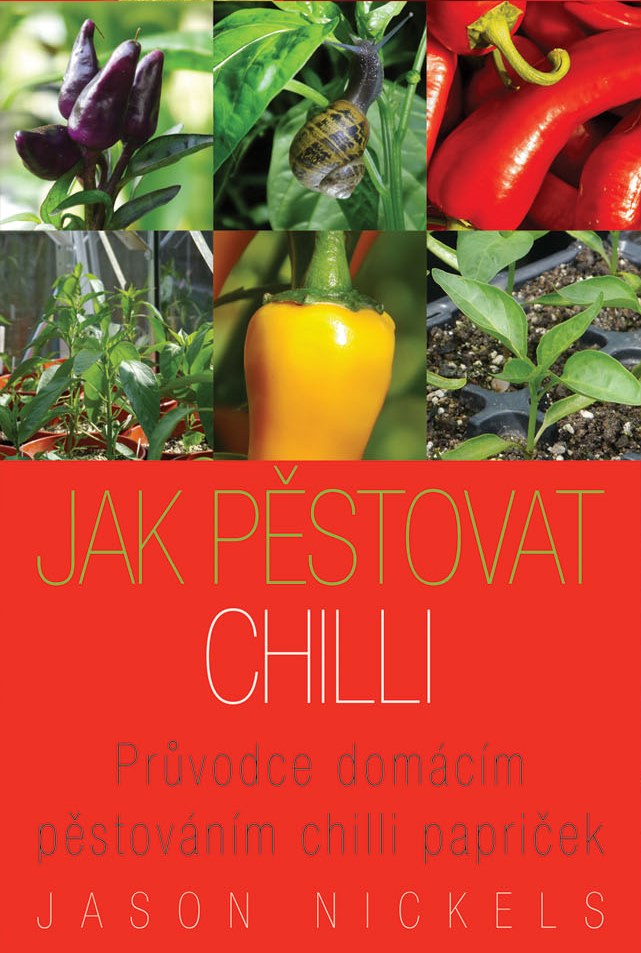
Jak Pestovat Chilli

Growing Chillies Book is now published in Czech language


Dobrá zpráva pro milovníky chilli. ‘Jak Pestovat Chilli’ Nyní v českých knižních obchodech.

I’m not sure if there are ever any readers of these pages who are speakers, or indeed readers, of Czech, but if you are then Growing Chillies Book, or should I say ‘Jak Pestovat Chilli’ is in a bookshop near you! Of course this is a bit of a catch 22, if you can read this, you may not need a Czech translation, but if you do, you can link to the details here –  www.pestujchilli.cz You can order it online or buy it through bookshops.

I will be visiting Czech Republic for the weekend of 5th & 6th September to do some book signing and talk at a chilli festival there; more details to follow soon.

Jak Pestovat Chilli

Growing Chillies Book, now translated into Czech

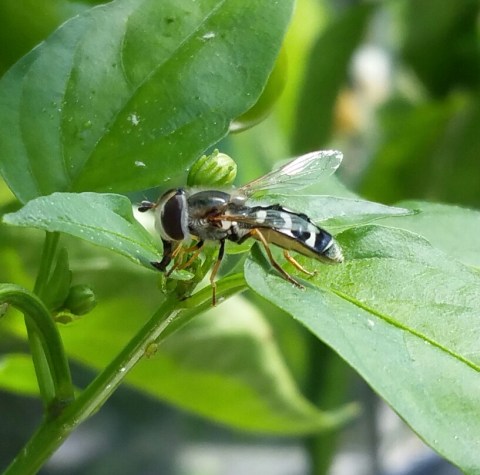
Hoverfly laying eggs on a chilli plant

Hoverflies, Predators of Greenfly

The most commonly talked about predator of greenfly is ladybirds, you can buy them online, or collect them from around the garden, often on stinging nettles, which are themselves riddled with greenfly.

Just as effective, and just as common, if not more so, are hoverflies. The flies themselves usually feed off of plant nectar, but the larvae of many hoverfly species feed on greenfly along with other aphids, thrips and any other small insect they can get their teeth into.

I have a few more greenfly than usual in the greenhouse this year, but today I noticed that the battle has turned against them. I have left the doors wide open in the last few days in the hope that some predators might come in, even at night, which means I risk moths coming in, and that means caterpillars. Sometimes the line between good and bad is a fine one.

I discovered a new way of finding greenfly, just watch where the hover flies go. I have never watched them this closely before.

Update – For a bit more on greenfly detection have a look at this later blog entry.

Hoverfly laying eggs on a chilli plant

Hoverfly on chilli plant

This chappy (chappess actually) hovered around the plants from shoot to shoot, only stopping at the ones which had greenfly in the tips.Here you can see her sucking on a leaf, maybe one that is covered with the sweet sticky dew that the greenfly exude, this is also the stuff that ants love. I couldn’t get a picture of her next move, which was to reach in with her back end and lay an egg among the greenfly. One egg laid, then on to the next shoot. Only the shoots with a greenfly benefited from an egg, so hopefully in a day or two a tiny larvae will emerge on each and start munching. They grow quite quickly so in a few days I will have a picture of one. Watch this space.

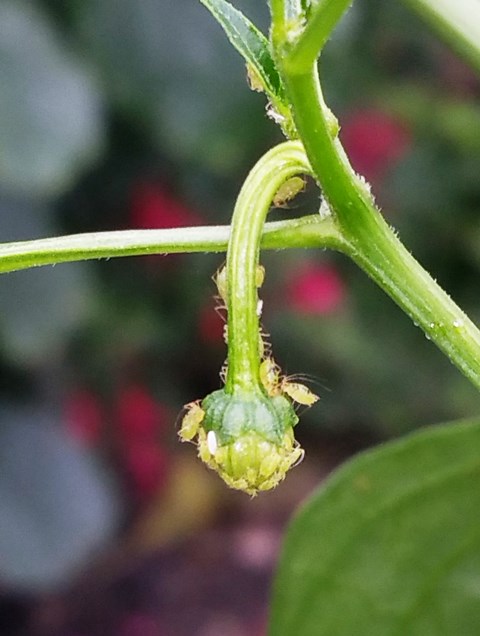
Greenfly on Chilli Flower

Hidden Greenfly Damage

Most people know the common reasons why we shouldn’t let greenfly run amok over our chilli plants, they suck it dry of sap and nutrients and they spread disease. One other big problem with greenfly is that they ruin fruit. Malformed fruit is a fairly common problem on chillies and other factors come into play such as environmental conditions, genetics, and diseases, but problems resulting from greenfly damage are often not credited as such because they occur long after the greenfly have gone.


Greenfly on Chilli Flower

Greenfly on chilli flower

The above picture shows how they enjoy getting their beaks into the soft flesh of a flower, often the flowers and new shoots are the first parts of a plant to be attacked because they are the most tender and succulent. Once this flower opens they will get inside and feed of the reproductive parts of the plant and the tiny chilli before it has even developed. This results in scar tissue from where they pierced the flesh and the outcome is a chilli that is split, or misshaped. You can see this in the picture below.

Greenfly damaged Chilihuacle Negro Chilli

Greenfly damaged Chilihuacle Negro Chilli


Now the Chilhuacle Negro is an odd chilli anyway, the skin is always matt coloured and leathery, even when it is fully ripe (when it turns brown) and it is never smooth and round, but you can see here that secondary fruits have formed close to the calyx (where it joins the stem). On the right hand one these aren’t even closed, they are split open and you can see inside. Whilst still edible, this will probably start to rot before it ripens, and if you were a commercial farmer it certainly wouldn’t be of a quality that you could sell.

The answer to this problem is that as soon as you see evidence of greenfly, usually the feathery white skins on the leaves below, check your flowers. It is difficult to get at the greenfly inside and crush them without damaging the flowers, so you can use an organic spray, but I think it is best to nip off the flowers while they are young so the plant doesn’t waste its resources growing useless fruit. It will soon grow more flowers,usually they produce many more flowers than fruit anyway, and it ensures you get rid of your greenfly and leave the plant producing a healthy crop.

I have had more problems than usual with greenfly this year, but as documented in a previous blog, by far the worst affected have been the Chilhuacle Negros, these fruits must have come from the first flowers be hit, before I even saw them, and I have picked a few fruits like this now. You can never be too diligent!


The Order of Greenfly

I have long been fascinated by the way greenfly will populate one type of chilli plant but not another, and while chilli plants are generally a tasty target, greenfly are happy to dig into one variety while another variety next door goes unscathed, at least for a while.

Some years I get very little in the way of greenfly, other years, like this one they are more of a challenge but even though they are pest, I still find them strangely fascinating. Their breeding cycle is weird, some are born with wings, some without, and some are even born pregnant.

So I have been observing their progress recently. A few weeks ago i noticed a few on my Chilhuacle negro plants, but not any of the others. Now they have spread a bit, firstly to bhut jolokias, but not Carolina reapers, then to some cajun belles, then to some aji, and yet the pimiento de Padron in-between remain untouched.

An entomologist once told me that that they tend to stick to one variety if they can and so in my greenhouse I dispensed with keeping plants of the same variety next to each other, now I alternate them, so that if one plant is infected with greenfly then they are less likely to jump onto the neighbours. Apparently they just get used to the sap of one plant, and their young will prefer to stay there. They still managed to spread from one chilhuacle to another, but it took a while, the fact that they were spread out bought me some time to squash them.

Anyone done any serious experimentation on this?

Salsa Macha

Salsa Macha – Filling, Indulgent and not too Healthy

Salsa Macha Web

Salsa Macha

It is cold outside, Friday night is only hours away, and we need to kick it off with something a bit filling, satisfying and indulgent.

I can’t think of a recipe with such a fatty list of ingredients, (although I’ve seen a lot worse on the ingredients list of dips picked off the supermarket shelves), and worse still it is easy to polish off an awful lot of this stuff in a very short space of time. But hey-ho, this is an extremely versatile cooking sauce, dip or marinade; akin to satay sauce, but with a spicy and smoky taste. Traditionally it is heavy on chipotles, but I find that using a large proportion of the widely available chipotle morita is too overpoweringly smoky and gives it a burnt flavour. So I usually use less of them, or milder home-smoked chillies, as well as guajillo powder.


150g crunchy peanut butter

3 chipotle moritas (probably more if you have smoked the chillies yourself and they are less intense)

4 cloves of garlic, finely chopped.

100ml olive oil

2 tbsp brown sugar

2 tbsp sherry vinegar or red wine vinegar

2 tsp guajillo chilli powder

1 tsp sesame oil


This is almost a cheat’s recipe, as it uses peanut butter to dispense with the need to blend nuts into the sauce, but this doesn’t seem to affect the flavour and it makes the recipe so simple I am more likely to use it.

Soak the chipotles in a small amount of hot water for about 20 minutes, then take them from the water and chop them finely. Or you can grind them into a powder if you have a spice or coffee grinder.

In a small saucepan mix all the ingredients together and bring to the boil, simmer it for a minute or two whilst stirring constantly. Transfer to a bowl and leave to cool, as it cools the sauce will thicken.

This is a rich and tasty dip when served with corn chips or pitta breads. It is also a great thing to pour over barbecued meat, as you would chicken satay, but to my mind the extra smoked chilli gives it the edge.

Aji Chilli Flower November

When will my chilli plants die?

I had set aside this morning to do a little bit of pruning on a handful of plants that I would like to over-winter. In my growing chillies book there is a section on keeping plants over the winter, what temperatures to keep them at, how to prune them and when. But it isn’t an exact science, and very dependent upon autumn temperatures, where you live and where you keep your plants.

Anyway, despite the fact that we are only 5 weeks away from Christmas, the plants I want to keep, which are still in a greenhouse, in south Devon, are all still healthy and don’t yet need any pruning. Having said that, the ones I am keeping are mostly ones that I know will do well, or that I know are worth investing a bit of time and warmth in. So I have a some aji plants, a nice big piri piri, and a whopping great moruga scorpion. There are a few others which have a bit of fruit to ripen, but things like jalapeno, most of my habaneros, pimiento de padron and a few others have mostly been consigned to the compost bin.

So my thoughts turned to which plants would die first if I left them as they are. Which are the most frost tolerant? And some people might be interested in an experiment we conducted at the chilli farm many years ago. With the help of the weather we achieved some fairly accurate and interesting results. In a polytunnel containing 100 varieties we didn’t do the usual autumn cleanup, which is the way it should be done, good garden hygiene, stop the spread of disease, bla bla bla; instead we left the plants in situ, and while the temperature dropped over successive days we observed the results. This was the first cold snap of the year, so to begin with all the plants still had most of their leaves.

As the temperature inside the tunnel dropped towards freezing the first plants to succumb were the tropical ones, Capsicum chinense the habaneros and scotch bonnets, they will lose all their leaves in a single night at 1 or 2°c.

The next night the temperature dropped lower, and hit zero for the first time. At this point the ones to go are the bigger Capsicum annuum big peppers and jalapenos, especially the newer more highly bred ones.

Another day went by and overnight the temperature had reached -1°c. Now looking along the beds it was really evident which ones were survivors and which ones had suffered, but the leafless plants were interspersed with quite a few that still retained their leaves. These were mostly the Capsicum baccatum, tougher leaves and stems, originating from Andean areas where frost tolerance would be an advantage. But also the piri piri, tabasco, and strangely the Prairie Fire were still lookiing good, so the Capsicum frutescens display a lot of frost hardiness too.

Yet another day, and another degree or two of frost, and the only survivor was the tepin, a scrubby bunch of twigs, tiny tough leaves, and a very poor fruiter, but this truly wild chilli out-lived the rest; in fact this very plant lived on for four more years, until a very cold winter brought temperatures of -10°c, and that was the end of it.

So what is to be learned from this? Whatever the ‘rules’ about plant pruning and overwinter temperatures there will always be exceptions. My favourite is the piri piri, always the most loved chillies in my collection. I have said this before, but my mother has the ‘mother plant’ it is the only one she keeps now, so the seed never crosses with anything else, and I always kick off more than I need every spring. There are a lot of varieties under the piri piri banner; this is a Portuguese one, from an old ladies garden, and about midsized as they go, up to about an inch long, and they are solid bullets.

Piri Piri in a Raised Bed, November

Piri Piri in a Raised Bed, November

This picture of Piri Piri plants was taken on 12th November. It sits in a fairly sheltered south facing raised bed, which most importantly gives it good drainage so its roots aren’t sitting in claggy wet soil. The mild autumn temperatures this year do the rest, and it still flourishes albeit slowly, with ripe fruit, new fruit, and flowers.


Big Greenhouse Piri Piri Chilli

Piri Piri in the Greenhouse, November

This plant is the same variety, but inside a greenhouse, it is still going great guns, and might even survive the whole winter at this rate.


Aji Chilli Flower November

Aji Chilli Flower, November

I’m always interested to know what the real survivors are in the chilli world, so if you have any anecdotes or experiences, post them underneath for others to see.

Mango & Chilli Hot Sauce

Mango & Habanero Sauce

I’m embarking on my 3rd batch of this sauce since the summer, it has definitely become the sauce of choice in our household.

This fruity recipe will make what most people would consider to be a hot West Indian or Belize-style sauce. Some aficionados will think it is a little weak though, so there is no harm in adding more chillies, even doubling or tripling the number of chillies used without changing the quantities of the other ingredients.

Ingredients

200g mango
100g grated carrot (preferably small or
baby carrots)
100g white onion, chopped
50g white sugar
5 x orange or yellow habanero or scotch
bonnet chillies
150ml water
200ml cider vinegar
2 cloves of garlic, chopped
1cm cube fresh ginger, chopped
½ tsp salt

Method
Use baby carrots if you can get hold of them, or at least small ones that aren’t woody and tough. If you are using fresh mango, remove the flesh and chop it into pieces. One large mango should do, but buy two just in case, you can eat the leftovers. You can alternatively use a tin of mango pieces; if you do so, use the stuff tinned in juice rather than syrup, a
400g tin should give you just over 200g of flesh with a few pieces left as a snack.
Chop the onion, garlic, ginger and chillies and grate the carrot. Add to a pan with the salt, water, mango pieces, vinegar and sugar. Bring to the boil and simmer with the lid on for about 30 minutes. Keep an eye on it, don’t let the mixture boil dry or thicken beyond a watery slush, add a little more water if need be.
The mango should break down quite quickly, and eventually the onion will soften too. Transfer to a blender and blend this
mixture to a smooth thick creamy liquid. Alternatively use a stick blender to do this in the saucepan. Don’t be shy, you are after a perfectly smooth finish and you can’t blend it too much; the more you do it the less likely the sauce is to separate into solid and liquid. If you use a separate blender, rinse your saucepan while it is empty, you will be returning the mixture to boil again so you need to make sure that stray lumps don’t mess up your smoothness. You may find there are some persistent stringy mango threads too, so remove these using a fork, they probably won’t break down much further and will only clog up your bottles.
If the liquid looks too thick, you can add a little extra water during the final simmer. You then need to bottle it in sterilized bottles, clean them, boil them in water for 10 minutes, then drain them. There are lots more tips and instructions on bottling and sterilization in my ‘Cooking Chillies’ Book, together with other hot sauce recipes.

Mango & Chilli Hot Sauce

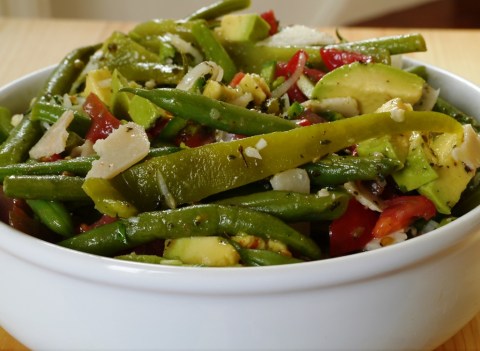
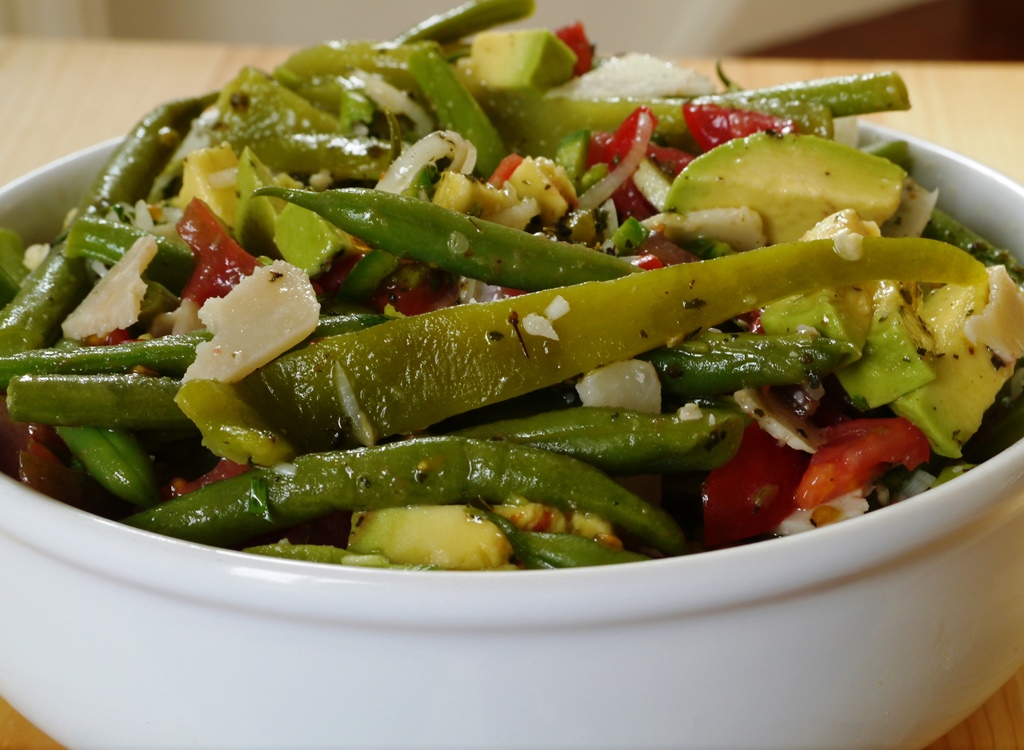
Green Chilli and Green Bean Salad

Green Chilli and Green Bean Salad

Another recipe from ‘Cooking Chillies’ book. I made this probably for the last time in a while as I have picked what are probably the last of the dwarf beans from my greenhouse until the spring. There are still some green chillies to pick too, but the ones i used today were pre-skinned and came out of the freezer.

The thick flesh of the chillies, the filling beans and the avocado together with a mouth-watering dressing make this not just a side salad, but a hearty meal that stands on its own merits. Serve it while the beans and chillies are still slightly warm from steaming for the best flavours.

250g fresh dwarf French beans

3 large green chillies (New Mexico, Anaheim or Romano peppers)

1 avocado

1 large beef tomato, chopped

50g parmesan cheese, grated or crumbled

2 spring onions, finely chopped

1 small jalapeno chilli, finely chopped

2 tbsp extra virgin olive oil

2 tbsp white wine vinegar

1 tbsp fresh coriander, chopped

Juice of ½ a lime

1 tsp dried oregano

½ tsp salt

Grill the green chillies and remove the skins, stems and the seeds inside.

Prepare the dressing in a small bowl using the vinegar, oil, coriander, oregano and salt. Add the finely chopped spring onions and jalapeno.

Steam the beans until they start to go limp, normally around 4-6 minutes depending on how big they are. Cut the chillies into strips and just at the point the beans are starting to bend easily add the pepper strips and steam for another minute. Be careful not to steam the beans to the point where they start to lose their dark green colour and go pale. Transfer the beans and chilli strips to a serving bowl and leave to cool for a few minutes while you chop the avocado and tomato.

When the beans and chilli strips have stopped steaming, but while still slightly warm, stir in the parmesan, followed by the avocado, tomato and dressing.

Green Chilli and Green Bean Salad

Green Chilli and Green Bean Salad

Spicy squash chilli soup

Spicy Squash Soup

Spicy squash chilli soup

Spicy Squash Soup

This is one of the most regular things I cook so I thought I’d share the recipe. Spicy, warming, smooth and creamy; a warming and filling winter soup, the ancho powder gives a great depth of flavour without making this too hot.

Ingredients

1 large or two small butternut squash (about 1kg
of flesh)
150g white onion, chopped
500ml water
200ml double cream
100g carrots, grated
25g salted butter
1 clove of garlic, chopped
10g ancho powder
1 vegetable stock cube
1 tbsp olive oil
½ tsp cumin powder
½ tsp salt

Method

In a large saucepan, soften the onions, garlic and carrot in the butter and oil. Cut the flesh of the squash into small cubes and when
the onions have softened, add the squash, water, stock cube, ancho powder, cumin and salt.

Bring to the boil and simmer for about 30 minutes. Transfer to a blender and blend until smooth, alternatively use a stick blender

directly into the pan.

Transfer back into the pan if need be, add the cream and bring back to a simmer before serving.

You can find this one alongside lots of other delicious things in my new book, ‘Cooking Chillies – Recipes and Ideas to Make the most of a Chilli Harvest.’