Overwintering Chilli Plants – Some practical examples

The overwintering of chilli plants, in temperate areas anyway, is probably the most variable and uncertain part of chilli growing. The most detailed advice is, at best, to be taken with a pinch of salt as there are so many more variables to think about when you compare overwintering with, say, germination. How warm is the autumn? how cold is the winter? where are they kept? what variety? How long are the daylight hours?

So rather than dispensing general advice, which I, and many others have done before, I will illustrate some practical examples of what has happened to some of my experimental plants this winter. For a little bit about what happened to some of my plants back in the autumn you can link to the blog entry ‘When Will My Chilli Plants Die?’.

Where I live near the coast of  south Devon in the UK, we have had what is, so far, undoubtedly the mildest winter ever, so I still have a few plants that would not normally survive. This is as good as it gets, and things haven’t been great, so this illustrates the general advice that you should bring any plants that you want to keep into the house where they stand a very good chance of survival. The hardier of my plants were busy fruiting in my greenhouse until Christmas. Up until that point we had only two mornings when there was frost on the ground, and even then the greenhouse temperature only dropped to 3c. Often temperatures were 15 or 16°C and not far of that at night times. It was really really dull and wet though, so I wasn’t hopeful for some plants that I left outside.

Through January temperatures were still warm, and it is only in the last couple of weeks that we have had consistently lower temperatures, but still the greenhouse hasn’t dropped to lower than 1°C.

Despite the warm early winter I am still not surprised to see that most of the plants I tried to overwinter in the greenhouse or outside are looking doomed. There are a few which will survive, but 4 months of short days and just a couple of months of cool temperatures have still mounted up so that only the real hardy ones will live on.


Rocoto, overwintered in cool greenhouse

Rocoto, overwintered in cool greenhouse, pretty good.

I had little doubt that this rocoto would survive, they are pretty hardy and this one wasn’t pruned back till January, and at the end of February it is still looking nice and green. It is in a smallish pot in the greenhouse.


Rocoto overwintered in vegetable patch. Very dead!

This rocoto, above, wasn’t as lucky. It was very much an experiment, it grew well outside in a vegetable patch protected by climbing beans all around, but the wet soil and a battering by the wind means it is unlikely to shoot out again this year.


Rocoto overwintered outdoors in pot,

Rocoto overwintered outdoors in pot.

This 3rd rocoto was overwintered outside the greenhouse in a large pot, it is looking pretty good, the stems all nice and green, the soil drains easily and I hope it will shoot out in the spring. I will move it into a greenhouse to give it a kick start.

Rocotos are generally one of the safest bets when it comes to overwintering. The others that do well are the baccatums, ajis, and some of these have done OK in the greenhouse.


Aji in greenhouse

Aji. overwintered in greenhouse

Aji. overwintered in greenhouse

The botton aji limon is looking green and healthy, but the one above is dead at the main stem, so I am not hopeful for this one, I think the main stem will rot down and cause the plant to die.
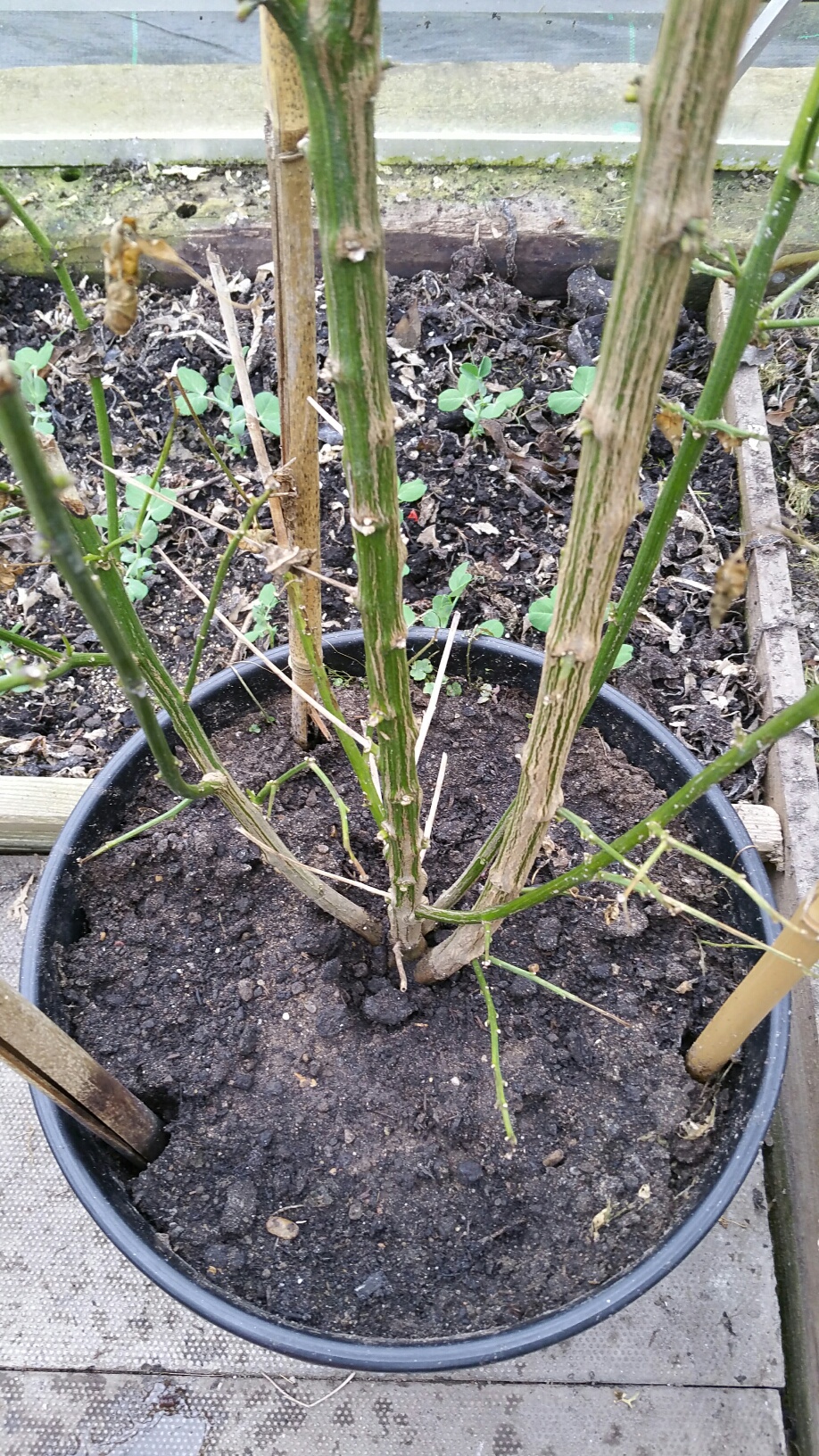
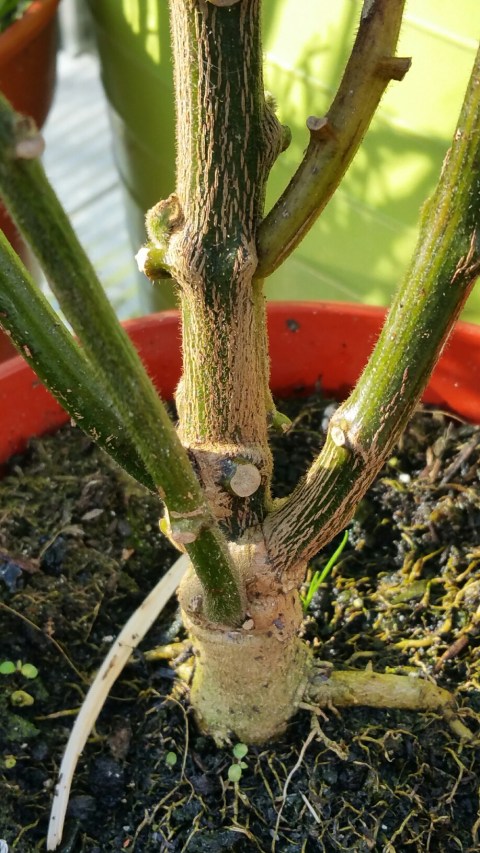
Piri piri, overwintered, good and healthy.

Piri piri, overwintered, good and healthy.

Finally, this is one of my old faithful piri piri plants. This is its second winter, it will stand colder than anything thrown at it so far and I am confident it will do well again this year. The stems are still green up to about 1m high and I have only pruned the straggly small stems to keep it in shape. It is in a big pot, which keeps the roots insulated against sudden drops in temperature, and it is under glass.

I started off hanging on to other plants, either to see which was the first to go, or to test out some new ones. I have never overwintered Carolina reaper before, so I tried that. In the house is OK, but a couple in the greenhouse died back quite quickly. Likewise various annuums they didn’t do well in the greenhouse either and are already in the bin. I wouldn’t normally try keeping these anyway, things like jalapenos don’t perform as well in their second year as newly seeded ones, but as October and November were so mild I hung onto a few.

This last one was an annuum that I did secretly hope would survive, as it would have been great to see it shoot out early. It is a pimento de Padron, and was nearly 2m high in a greenhouse bed, but I’m not sure if it will grow again, watch this space.

Pimiento de Padron overwintered in a greenhouse bed

Pimiento de Padron overwintered in a greenhouse bed
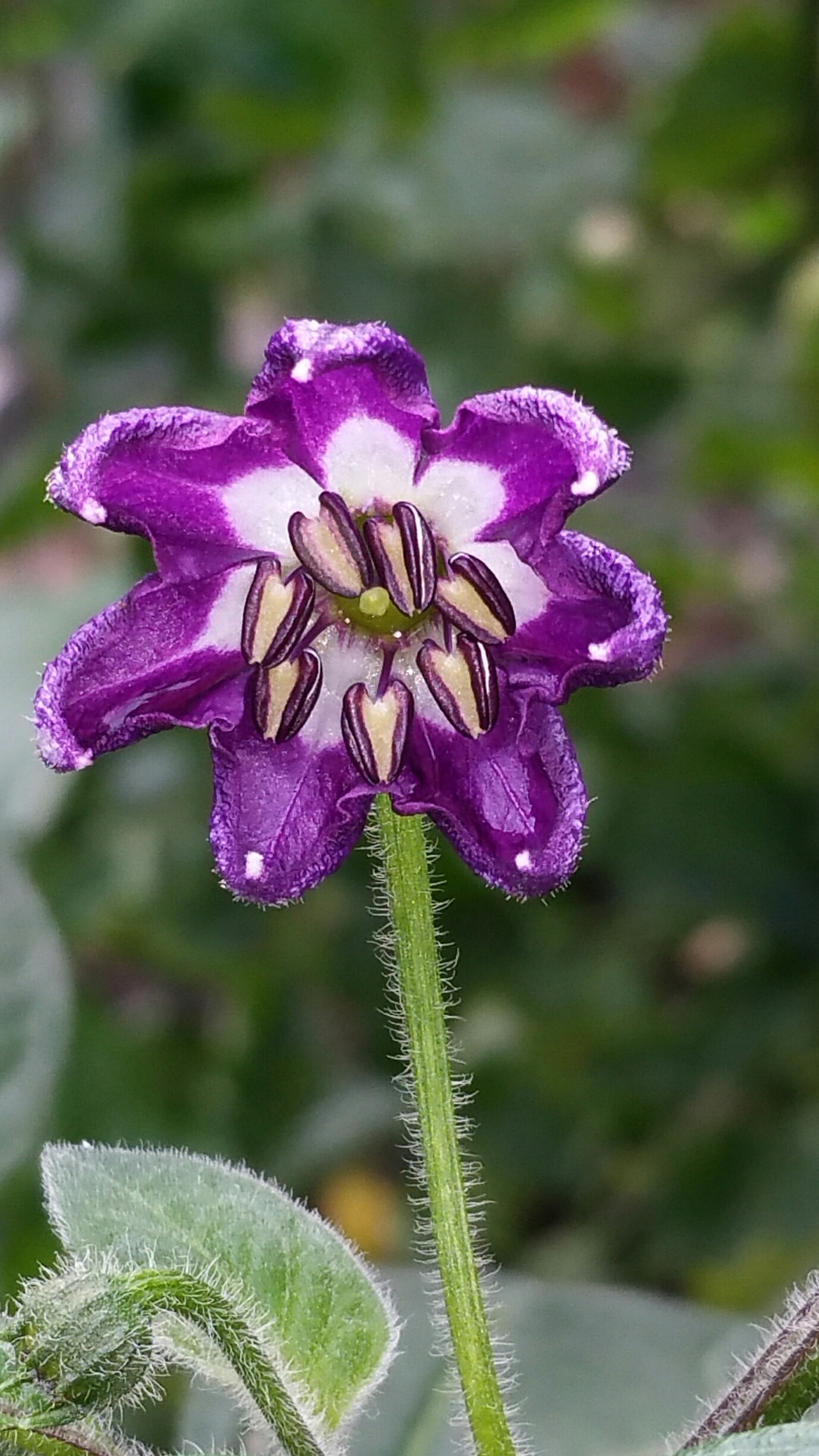
 

Rocoto – Capsicum pubescens

Rocoto is one of the most interesting chillies to grow. It doesn’t suit everyone’s circumstances as it takes a long time to mature, and the plants grow huge. On the plus side, they are quite tough, resistant to diseases, infections and pests, and they tolerate cold more than almost any other variety. I think that to look at, they are one of the most stunning of chillies. On the plant they look like apples, hanging from a very thin curly stem. They grow to the size of small apples too, and whether they are red, yellow or orange, they look equally as impressive. Be prepared to let the plants grow to their full size, which can be 2m across and 1.5m high. You do this by giving them as big a pot and as much space as you can, large tubs or drums are better than plant pots. If you live in a region with mild winters they will live for years, and grown in the ground, will grow even bigger and form large shrubby bushes.

Rocoto Red chilli

I don’t grow them every year, as they take up so much space, but I thought I’d give them a go this year and put some plants outside, always a gamble in the UK. They fruit more quickly in higher greenhouse temperatures, so I kept them inside for as long as I could, then the biggest plant was moved out of the greenhouse for July and August when it really got too big. It is in a big earthenware pot which gives it enough weight to stop it falling over and it has spread quite wide, probably 1.5m. When I moved it back into the greenhouse in September I pruned it to remove the longest stems. You don’t normally have to do this but it was that or leave it out in the cold.

It fruited well, and they developed nicely outdoors, even though the August weather wasn’t great. September was warm so it carried on prospering and the fruits started to ripen in October; this is from seeds planted at the beginning of March.

Rocoto Flower

Rocoto Flower

I also experimented with planting one outside in the vegetable patch. The hairy leaves and stems characteristic of Capsicum pubescens are a deterrent to slugs and snails so it has been largely untouched by pests. This is still looking healthy even at the end of October, and it is flowering well but it won’t bear ripe fruit I am sure. I will leave it there to see how it survives the winter.

Rocoto Green

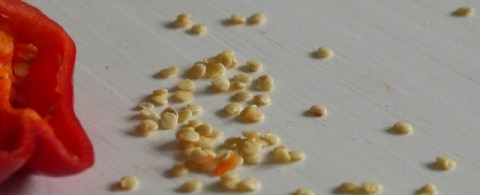
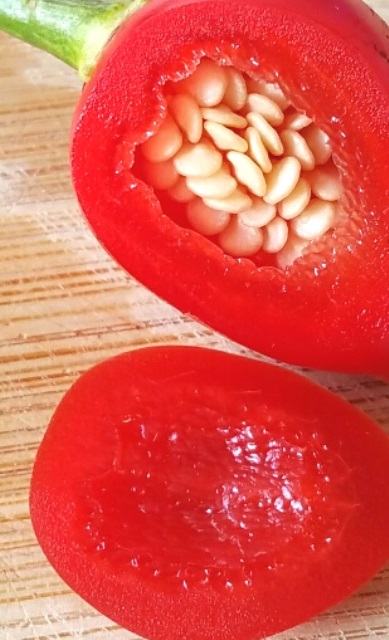
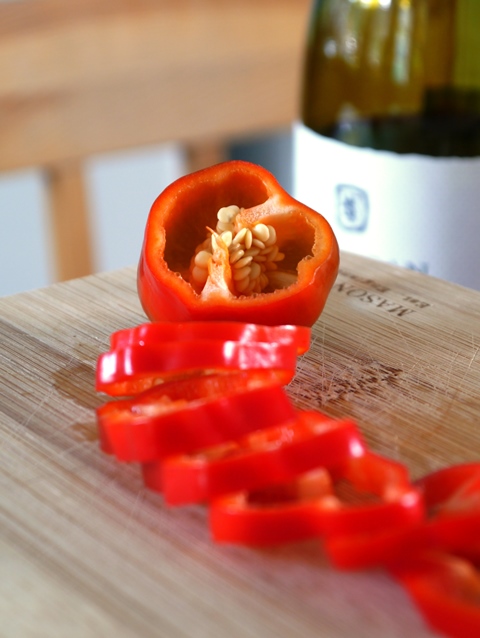
One strange characteristic of the rocoto is its black seeds, which you instantly notice when you slice one open, this is quite natural. Be careful when chopping these, they are packed full of juice which seems to spray everywhere, all over your knife, hands, and chopping board, even in your eyes if you get too close.

Rocoto Red Sliced

I find the taste and heat of rocoto quite different to other chillies. If you eat a small piece the burn is instant, very fresh and permeates quickly, as though the capsaicin has been dissolved in alcohol which is not a nice experience for me, a bit like taking a slug of chilli vodka. Even though these aren’t hugely hot, around 60,000 SHU, they seem to punch above their weight and I find an equivalent sized piece of habanero affects me more favourably, it burns my mouth, yes, but doesn’t overcome me so quickly.

Chilli Seeds

How long does it take for chilli seeds to germinate?

This is one of the most common questions novice growers ask; rarely are the answers detailed enough, and often they are misleading. The most common problem is when seed merchants give a very broad ballpark estimate of 2-6 weeks or something similar, covering their backs for any eventuality thereby mismanaging peoples expectations.

The reality is that most chilli seeds should germinate within 14 days, some of them much sooner. The quickest I have ever found are senor serrano, a modern commercial variety of serrano, in good conditions they will be emerging within 4 days. A lot of commercial jalapeno varieties aren’t far behind this, and I’d say the average is around 10 days across the board if conditions are perfect.

Chilli Seeds

The exceptions are often the super hot things, especially bhut jolokia and nagas, they are very erratic and often take longer, but again there are instances where they will pop up within 10 days or so, though this is less likely as they are more particular about moisture and temperature and it is more difficult to get things spot on. The more recent super hots, like Trinidad scorpions and Carolina reapers are less fussy.

The other exceptions, according to my non scientific experimentation is anything brown, by which I mean chocolate habanero, mulato, pasilla etc. There are many times where I deliberately set these to germinate next door to each other, or even in the same pot, and they have under-performed when compared to their standard relatives, e.g. mulato v ancho, or chocolate habanero v orange habanero. This is strange as ancho and habanero aren’t even the same species, but maybe the genetic variation that causes brown-ness also weakens germination, not for me to say without some proper tests.

Notwithstanding a dubious seed supply, or seed which has been poorly stored, if your seeds aren’t as quick as I have suggested above, then there is likely to be a problem with the way you are germinating them. Don’t despair, things will still happen, but be aware that your conditions probably aren’t perfect, so next time try something a bit different. You might have to buy a book to get all the details on what to do and what not to do :), at least now you know what you are aiming for.

Barra do Ribiero

This is a new one for me, this year is the first time I have grown it, but I’m really pleased. It is a Capsicum baccatum from Brazil so I assume it originates from the area of the same name. In appearance the plant looks very much like the more common aji limo/limon varieties with long bendy tough stems and small leaves. In a reasonable sized pot the plant grows to about 45cm high, and at least that in width once the fruit starts to weigh down the stems.

Barra do Ribiero, Brazillian chilli pepper

The taste is similar to an aji limon, sharp and citrussy, but the difference with this one is that the fruit is very fleshy and juicy, more reminiscent of a miniature rocoto. Although the whole thing is pretty hot, I’d say about 40,ooo SHU, you can easily slice off a piece of flesh for juicy munch without getting any heat at all. For this reason I think it is going to make a delicious sauce, the flesh should break down easily and you can control the heat by taking out the bitty seeds.

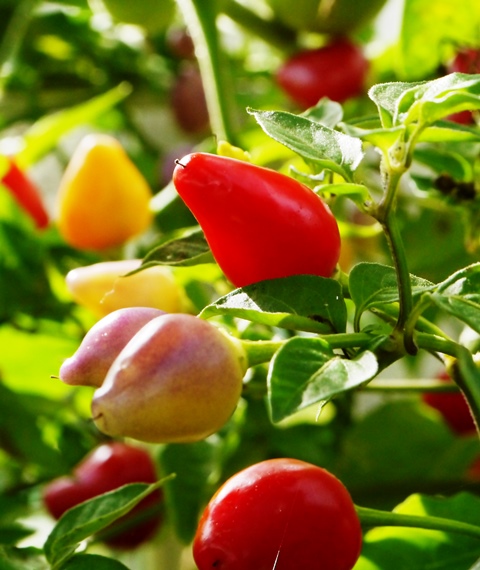
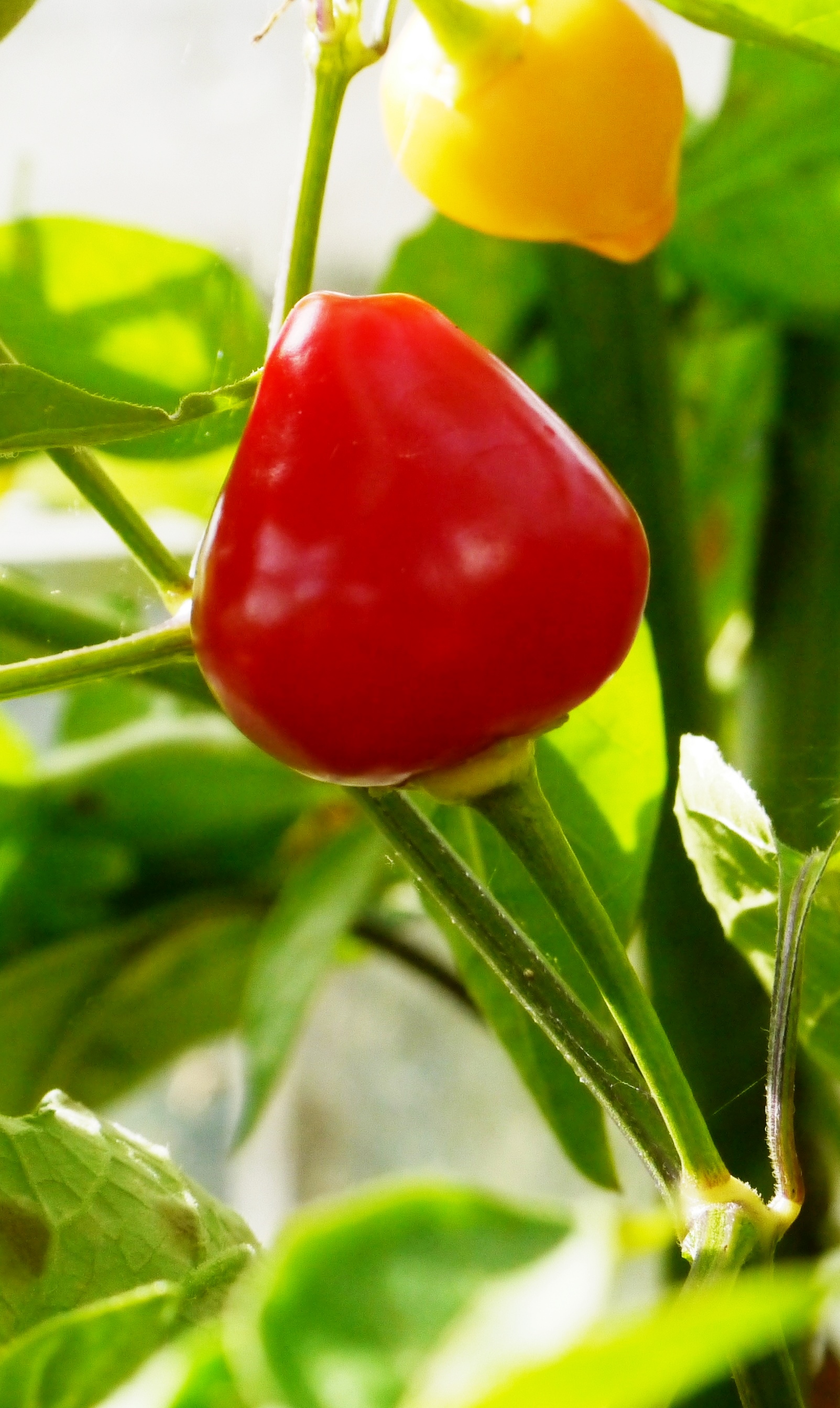
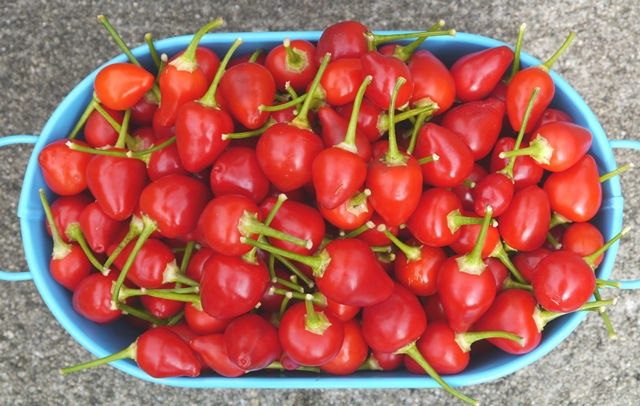
On top of this, Barra do Ribiero is beautiful to look at, each one is a firm and glossy heart shape. they start yellow, then go through a part purple stage before ripening to red. The first few I picked in early September, but the bulk weren’t ready till the end of that month,

Barra do Ribiero bowl 4 web

This was an easy one to grow, like most Capsicum baccatum varieties it is tough and resilient, I’d say it will toddle on into the winter in my greenhouse, still producing slowly, and should overwinter well. The seeds germinated easily, they came from Nicky’s Nursery. I have a good crop from 4 plants, and I’m going to have a go at everything with them, some I have dried, slicing them open first. Some I have frozen, and some I will make sauce with.

Barra do Ribiero Sliced close web

Chilli cook-off

Slovenian Chilli Festival – Lepa Zoga Ljubljana

I have spent the last 6 days in Slovenia, mostly in the capital Ljubljana, but also a visit to a friends farm and vineyard plus a trip to the mountains. The main reason for my journey, however, was to visit a chilli festival to promote the Slovenian language translations of my books, the most recent of which has just been released.

Kuhajmo s Cilijem & Gojenje Cilijev

The guys from Ebesede publishers selling Kuhajmo s Cilijem & Gojenje Cilijev

European chilli festivals are becoming a habit, only two weeks previously I was in Brno, Czech Republic, for a festival which you can read about here. I must say that they were both a real pleasure, and this one in Ljubljana, whilst quite small was a really friendly and laid back day out.

I wasn’t sure what to expect of the chilli industry in Slovenia, I knew there were a few growers, and a few sauce makers, and that they are roughly following along the now established lines of… small greenhouse grower/start at farmer’s markets/get some bigger tunnels/make more sauce/grow hotter chillies/make an extract sauce/put chillies in other stuff… much as we have done in the UK. Rather surprisingly, the wholesale side of growing of fresh chillies & peppers, broadly covered by the word paprika in that part of the world, doesn’t happen much in Slovenia. Maybe this is because a little further south or east in Macedonia and Hungary, they traditionally grow huge amounts, and this is what supplies the shops and veg markets of Slovenia whilst the Slovenians themselves concentrate on crops such as grapes, more grapes, pumpkin, corn and buckwheat.

20150919_085353_resized

The artisan side of chilli growing is thriving though, with the well established companies growing the full range of heats and flavours and manufacturing sauces to a highly professional standard. Slovenia has some fairly stringent rules when it comes to food manufacture. You can’t use your home kitchen if you are going to sell stuff. You must have a separate HACCP approved production facility, albeit a basic one. This creates a barrier to entry into the market that we don’t have in the UK where a quick sign off with the health inspector allows us to cook and sell low risk products in our own kitchens with less fuss. So while the number of companies that have taken the plunge is limited, they tend to hit the ground running because they have either made a significant investment, or they are farmers with existing facilities, usually from wine making. Products look good, they all seem to be machine labelled, they are properly blended to give good consistency and with an appealing range of flavours. Maybe the dedication towards creating a desirable flavour appeal has rolled over from the wine industry too.

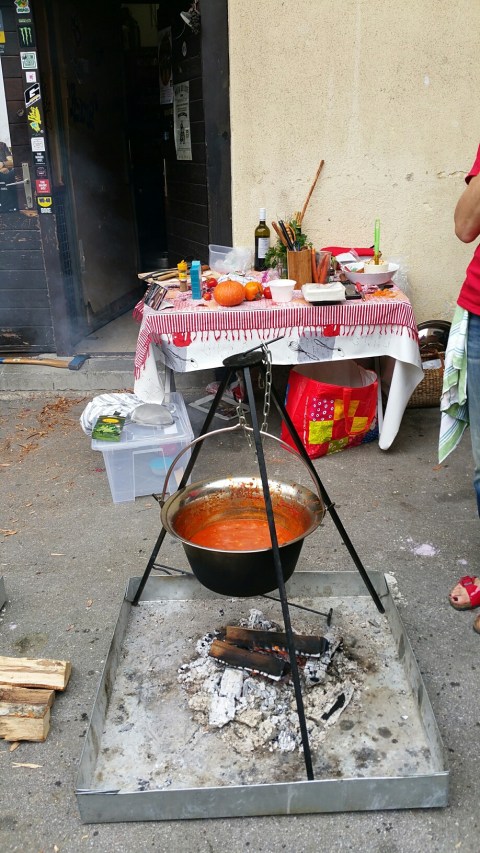
Chilli cook-off

Chilli cook-off

Chilli companies have attended food markets in Slovenia for years, but I gather that this was the first dedicated chilli festival and it went down really well. It was held at a slightly off-the-wall sports bar/cafe called Lepa Zoga. This was exactly the right kind of place for it; informal, good beer, a great reputation locally for gourmet burgers and hotdogs, and used to organising sports and music events. The venue incorporates the courtyard of something that reminded me of an American style balconied motel, which I think was some kind of barracks at some time or another.

Lepa Zoga cili fest

Lepa Zoga cili fest

Lepa Zoga loved it, and so did the 500 or so visitors. Unusually things kicked off early, at 9am, with stalls and a chilli cook-off which was judged around midday. This was great as it meant there was not as much competition for peoples time and it attracted not only the real chilli lovers, but lots of casual interest too. It should have finished at noon, but everyone was happy to carry n till about 4pm, and I’m sure there were a few who stayed into the evening.

Another unusual thing was that they didn’t have a chilli eating competition, I’m not a fan of them, although I don’t tire of watching the antics. Without one, this festival took on a more relaxed atmosphere; no anticipation of any macho show of strength, and no peak in expectation either. So often at a chilli festival the eating contest is the highlight, and after that everyone trips off home much like an English pub abruptly shutting its doors at 11pm, where this one casually continued on to reach a natural conclusion, as is traditional in Ljubljana cafes.

There was also a competition for the best sauce, which was won by CiliPipp, the most established grower and sauce maker, seed supplier etc. They have been going for 7 years, and for a while enjoyed all the TV and radio publicity that goes along with being a pioneer, until the competition came along; Tomaz Pipp’s story sounded very familiar to me. Gorki Chili is another established company, and I also met a few others selling chilli chocolate cakes, bread, and most interestingly a really successful and active cooperative group cili.si that not only make sauces but pool their surplus fresh ones to sell for charity.

Cili.si at Lepa Zoga cili fest

Cili.si at Lepa Zoga cili fest

Ljubljana itself is a bit of a secret destination, recent pedestrianisation of the centre now shows the city at its best, and it is quite stunning.

Ljubljana

Ljubljana

It is only 2 hours and a few quid away from Luton or Stanstead with cheap airlines, and what you get is Venice without the horrible pigeons and the 8 euro coffee. There is no hassle from street vendors and you don’t have to go to the back streets to eat where the locals do, they eat by the river with lovely views of the castle and all the beautiful bridges and buildings because nobody, and no restaurant will rip you off in Ljubljana. Outside of the city is a mecca for mountain walking, climbing, cycling or just enjoying the great outdoors. This is one of those countries where you can ski in the morning and nip down to the beach for a sunbathe in the afternoon. It won’t stay secret for long so get in quick, in fact there is another chilli festival this weekend.

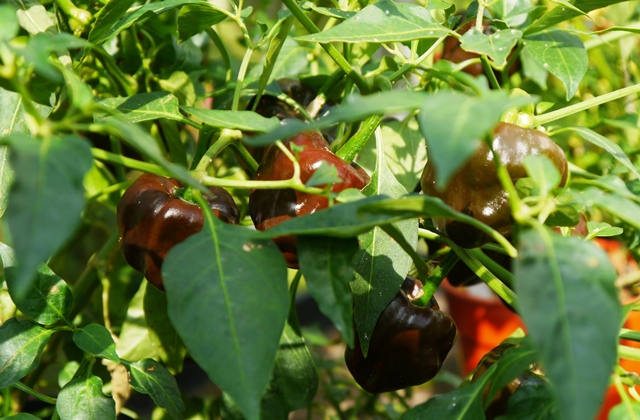
Chilhuacle Negro Chilli

Chilhuacle Negro

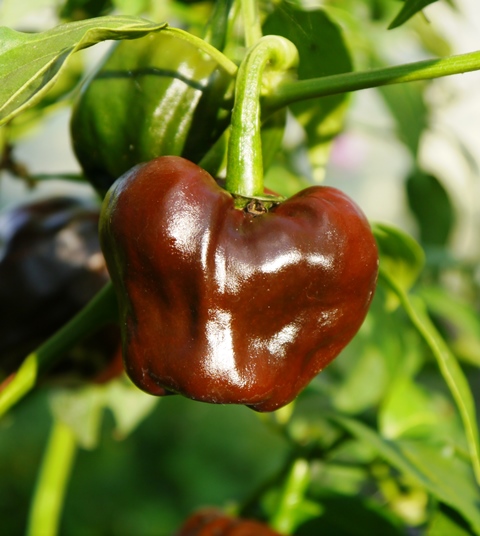
This unusual chilli, the chilhuacle negro, deserves a page of its own. It is a favourite of mine for a number of reasons; firstly its strange soft, brown, leathery feel is fairly unique, and secondly it looks quite spectacular when growing because of the shape of the plant.

Chilhuacle Negro Chillies

The fruits are about 4-5 cm cubed and ripen from green to brown, but they never firm up to that glossy, crunchy state that you would normally expect of a chilli. Instead they remain pliant and leathery with dull skin, as though they have been left on the plant too long and have started to dry out.

Chilhuacle Negro Sliced

Chilhuacle Negro Sliced

Linked to these characteristics is the ease with which they can be dried, in fact they already feel like half the job of drying is done before you pick them. They are naturally low in moisture, and with the matt skin, to completely dry them out is much easier compared to many other chillies.

Chilhuacle negro originate from the Oaxaca region of Mexico and are traditionally used dried, in a mole negro. They impart ‘dark flavours’, chocolate, tobacco and tannin and they aren’t that hot, maybe 2-3000 SHU, so you can safely use enough to make the most of these flavours without overdoing the heat.

Chilhuacle Negro Chilli

Chilhuacle Negro Chilli

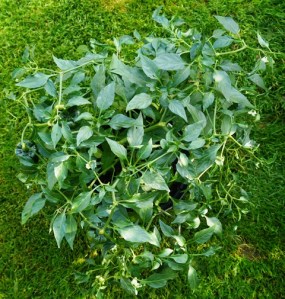
The plants, which grow to about 45 cm x 45 cm make quite a spectacle, and become laden with fruit, but remain compact. The stems branch frequently, with short inter-nodal length and quite unusually the stems can grow downwards, not bending over, but actually branching with strong stems growing down beneath the top of the pot. This gives the plant the appearance of a mesh globe, which, when combined with lots of brown fruit becomes quite decorative.

Chilhuacle Negro Plant Above Web

Chilhuacle Negro On Plant

If you want to have a go at growing them you can get seeds in the UK from Nicky’s Nursery they are quite hard to come by otherwise. They germinate quite well, as I have often found, with no scientific evidence at all, that many brown chillies are more erratic than their red counterparts (chocolate habs, ancho mulato for example). Once the seeds have germinated the fruit take around 16 weeks to mature to brown and they are always eager to keep producing into the autumn.

One thing I found this year, and I mentioned this in a previous blog, https://growingchilliesbook.wordpress.com/2015/06/23/the-order-of-greenfly/ is that they seem to have attracted greenfly where other plants around them did not. There were a few chilhuacle negro plants scattered randomly around the greenhouse, and yet they all seemed to get infected where the neighbours remained greenfly-free. The early greenfly which noshed into the flower parts before I noticed them, caused a lot of the first fruit to be quite deformed. Maybe this is partly due to the strange dry and leathery nature of the chilhuacle negro fruit, but some of the affected ones not only divided, but the skins split open so you could see the seeds inside. Needless to say I had to pick these and discard them as soon as they started to grow to make way for some healthy un-greenflied fruit.

Gojenje Cilijev - Slovenian Translation

Gojenje Cilijev – Growing Chillies in Slovenia

Dobrodošli!

I know that since the Slovenian translation of Growing Chillies – Gojenje Cilijev came out in April I have an increasing number of blog readers from Slovena. Although you have a translation of my book I am afraid that wasn’t down to me, the kind people at Ebesede did this, so I can’t help by translating all the content here into Slovenian, but I hope you can understand most of it if you need to!

I will be visiting Ljublijana from 18-21st September 2015 to coincide with the release of Kuhajmo S Cilijem – Which will be released around this time.


You can come along and get signed books at the Cili Festival, https://www.facebook.com/CiliFestival this will be held at Lepi Žogi, Ljublijana on Saturday 19th September 2015. There is going to be a chilli cooking competition and a hot sauce competition too.


#chillibrani

Chillibrani Chilli Festival – Brno, Czech Republic

I thought it might be interesting to tell people about a recent visit I made to the Czech Republic and to their ‘Chillibrani’ Chilli Festival (Chillibrani means ‘chilli harvest’). I was invited by my publisher there as my Growing Chillies book has recently been translated into Czech, and we went along to the festival to have a look, deliver a talk and sign some books. If ever you find yourself in that part of the world, or fancy an easy and interesting weekend away this is well worth considering.

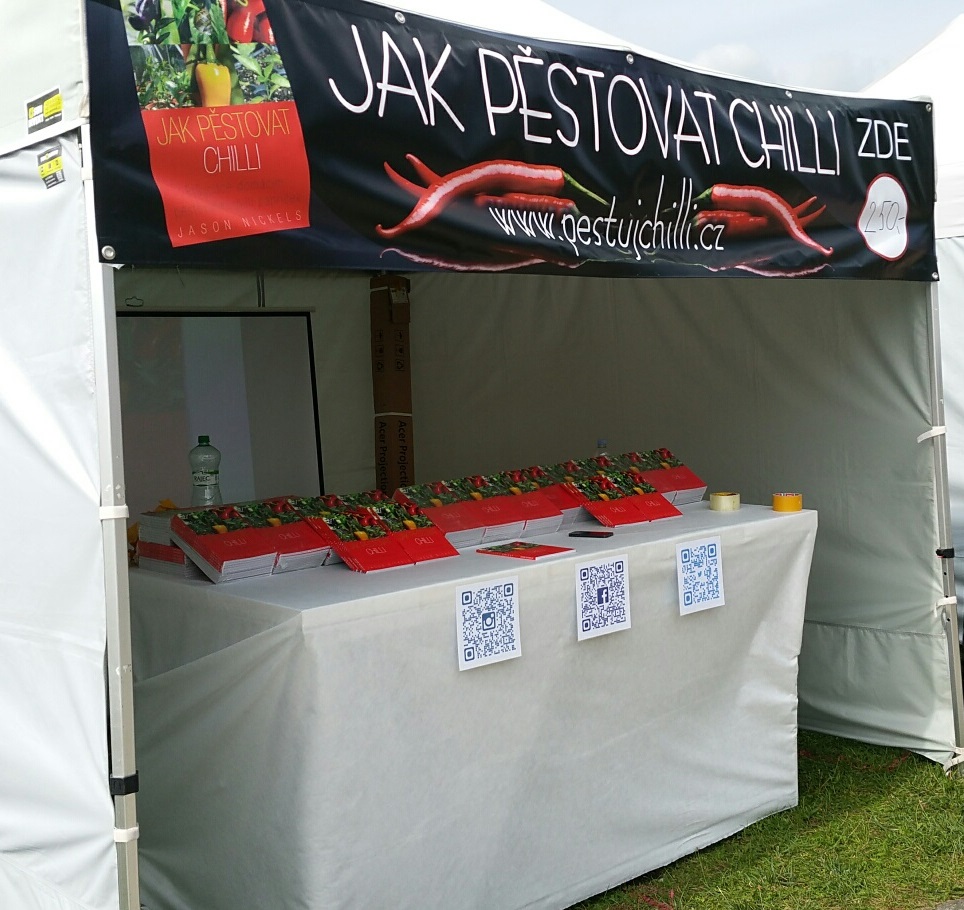
Jak Pestovat Chilli Booth

Jak Pestovat Chilli Booth

For those that have visited chillifestivals in the UK, nothing at Chillibrani will come as much of a surprise, but it is still a very worthwhile and rewarding festival. Many of the same traditions are seen there, lots of sauce makers offering tastings, various growing companies offering seeds, growing equipment, some fresh chillies for sale, music, beer, food and or course a chilli eating contest.

Chillibrani, Brno 2015

Chillibrani, Brno 2015

The festival was in the city of Brno, a couple of hours south of Prague; a very pleasant, cultured and laid back place. The Czechs are a little newer to the idea of chilli festivals than us. The popularity of growing chillies hasn’t quite reached the level that we have in the UK, but they are following the same timeline in the way it is developing, just a year or two behind us. I think because of that, this and one or two other chilli festivals (this one is in its second year) are enjoying patronage from all the various chilli businesses in Czech, as well as lots of visitors, while in the UK festivals have become so frequent that they are often somewhat under-attended with an incomplete set of exhibitors, and with some festivals looking a little empty because of it or not surviving at all. Not so in Czech, this festival had 4000 visitors, around 50 exhibitors, two stages, lots of interesting talks and demos along with a huge and vociferously supported chilli eating contest. The visitors were a real mix of people, not just hardened chilli heads, but also a lot of people who saw it as a good way of spending an afternoon in the sunshine eating and drinking.

Apart from chillies, there was plenty of good food, Indian, Czech, excellent burgers, cooked meats and plenty of beer. The beer there, needless to say, is fantastic; a few different brewery outlets offered a range of pilsner, lager, weissbier, and a couple of ales and stouts. All of these for sale for less than £1 for a half litre (don’t all rush at once, Brits have a reputation to shed in Czech Republic as far as anti-social beer drinking goes!).

The main difference I observed was in the chilli eating contest. There is a fundamental difference here which I think the Czech people need to learn, or maybe not, as it was quite entertaining. In the UK, and I think the USA too, the rules pretty much forbid the eating or drinking of anything other than the chillies put in front of you so that if you reach for yogurt/bread/water/beer or whatever, you are disqualified. In Czech, the competitors are given an equal amount of bread each, and I think 3 bottles of water. They can use this as they please until they run out, and only if they reach for yogurt are they disqualified. This makes for a very protracted event, with most of the competitors still completely happy up to round 6 or 8, which is well into the hotter habs and the super hot ones. With a lot of ceremony, winding up of the audience, interviews with competitors etc. between each round this shenanigans carried on for two hours and still there were a handful left of the 50 that started, all awaiting round 11, the 6.5 mil SHU extract sauce. At two hours I think competitors faces and digestive tracts were so numb that nothing could sort the men from the boys, or even the young girl, that remained in the line-up. So there was a round 12 and 13, each with increasing amounts of extract sauce, 30ml, 45ml, and each spoon with some roughly chopped Carolina Reaper or similar thrown in to give them something to chew on. At two hours and 10 minutes I think it was more about competitive bladder control than chilli eating and a few dropped out. Finally what separated the two remaining competitors was that one ran out of bread and water so with nothing to cleanse his palate he was off, leaving last year’s runner up the victor.

If you fancy a trip to Brno, it has a lovely city center with trams, cobbled streets, lovely architecture and a friendly selection of cafes and bars. If you go there don’t miss ‘the bones’ an ossuary under the main drag which holds the bones of 50,000 bodies exhumed from graves in the middle ages to save space in what was a walled city and stowed away in crypts, only to be sealed, lost, then rediscovered about 20 years ago.

Brno Czech Republic

Brno, Czech Republic

The chilli festival has a website http://www.chillibrani.cz/ This year (2015) it took place on Saturday 5th September and I think next year will be around that time too.

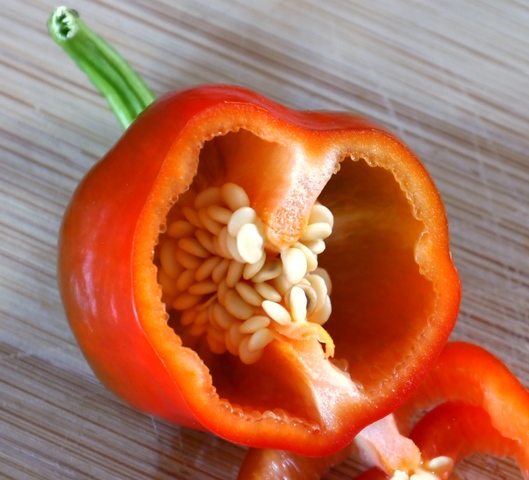
Sliced Cajun Belle Pepper

Cajun Belle

One of the varieties I have grown for the first time this year is Cajun Belle. I wanted a frying pepper, something that I could stuff or chop fairly freely into my cooking that gave a bit of heat, but also acted as a substitute for heat free bell peppers.

Cajun Belle Peppers

Cajun Belle Peppers

I sampled a few the other day, but today I did the first big pick off of 3 plants. I didn’t pick all of them, only the red ones and a few green. I’d say that currently there is an average of 25 full grown pods on each plant. That is pretty prolific as I’m going to get at least the same again before the year is out. Generally they are 6-8 cm long and 4 cm across so these are really heavy croppers. They look just like mini sweet peppers but quite thin walled and heat-wise they are probably about 3-4000 SHU.

The plants are generally upright and only about 60cm tall, so they are heavily laden with fruit by the time of the first pick and some of the stems need separate support.

Cajun Belle Green

Cajun Belle Green

So my verdict is these are a real winner if this is the type of chilli you want.

  • Quick and easy germination
  • heavy cropper
  • Seed to fruit (green) in 17 weeks (in average greenhouse conditions)
  • Tasty and with a bit of heat
  • Thin walled so the can be easily stuffed

The seeds came from Nicky’s Nursery I would dispute some of the stats on the description there, 61 days to fruit from seed is a bit of a tall order for any chilli. From ‘planting out’ as they say in the USA, maybe, but from seed, I don’t think so, that would have meant picking at the beginning of May for me, which I have never done with any chilli or pepper plant. That said, Cajun Belle is really prolific and I would definitely recommend them, and I will be growing them again next year.

Cajun Belle Chilli Open

Cajun Belle Chilli Open

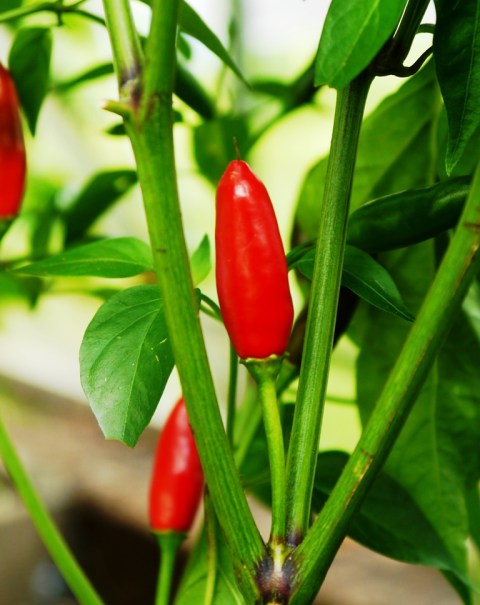
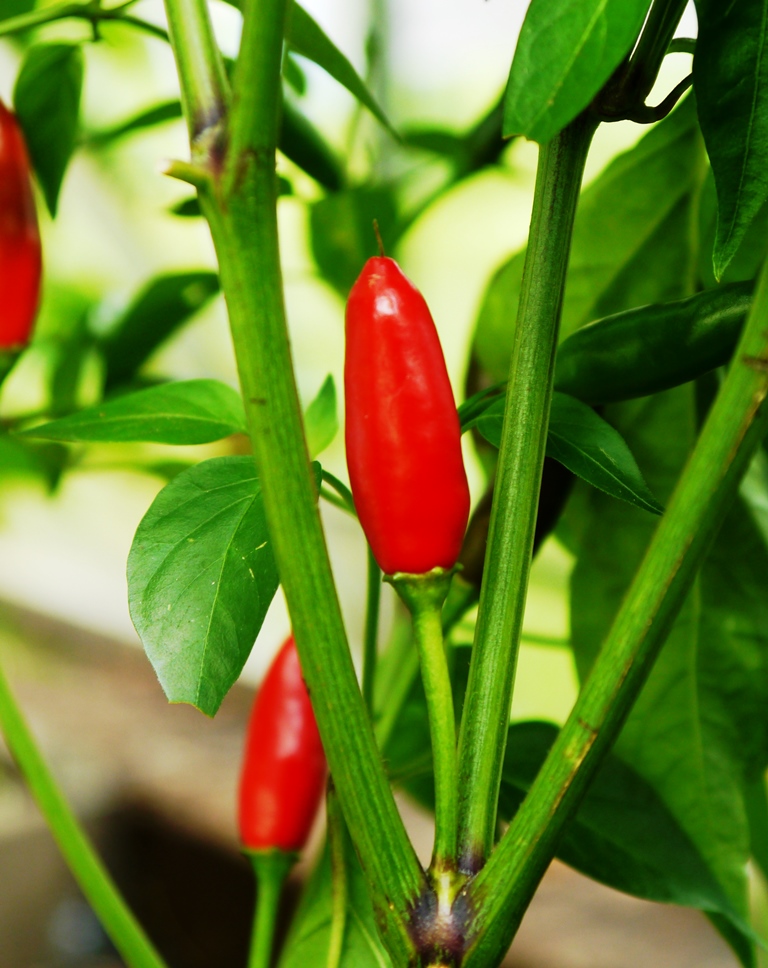
Piri Piri

My Giant Piri Piri Plant

I have a soft spot for my Piri Piri plants.  I don’t grow everything every year, I  rotate other plants around and If I have a freezer full of something I might miss a year. It gives me a chance to try new varieties and keeps me interested but I will always have my Piri Piri. Partly this is because they are just the best for overwintering, and partly because they crop so amazingly in the second year.

Nobody sells the seed, my seeds come from my mother’s ‘mother plant’. She first collected the seeds about 20 years ago from a garden in Portugal, and has kept them growing ever since, she has a plant about 15 years old, though I have to say it is a bit ropy now. Because she keeps this one growing, and doesn’t grow anything else so the seed she collects is always true. If anyone wants seeds for a plant like mine I can give them some of hers.

As far as I’m concerned this is THE Piri Piri. There are lots of other chillies that look slightly different all over Africa (chillies were taken to Africa from South America by the Portuguese) that are given this name, but that is simply the name they give to a small hot red chilli, so while the name is the same, the chilli might vary. This is made worse by the fact that where chillies are grown for Piri Piri sauce, they tend to choose something that is quick growing and prolific, then brand it with the Piri Piri name afterwards.

Anyway, back to my plant, the one below is now 5ft (1.5m) tall, and it will get bigger by the end of this year. It is a second year overwintered plant, last year it got to about 4ft (1.2m).

Piri Piri Plant

My 5ft Piri Piri Plant


These are great for overwintering. They are much more tolerant to cold temperatures than most capsicums, they will die back to stems, but this spent a few months last winter in a cool greenhouse with temperatures down to 0°c on a couple of nights. Last winter was a very mild one though (South Devon). Normally I wouldn’t expect plants to survive in the greenhouse, and nothing else that I left in there did.

Also, if frost hits in the autumn this one will survive where others don’t. According to my experiments nothing else will out-survive it apart from the tepin or Chiltepin, which are even more hardy, but pretty useless as a fruiting plant. This one pays dividends everywhere.

Piri Piri Flower

Piri Piri Flower

After winter it lays dormant for longer compared to other types. When I keep other plants they tend to start shooting out very soon after midwinter, and by early February they are shooting nicely. Not with this Piri Piri; maybe because the stems are quite woody, and it is a slow growing plant anyway,  you have to have faith and wait a bit longer, but it will catch up and still fruit earlier than first-year plants.

the chillies you pick will be pretty hot, I recon about 80-100,000 SHU, and off a big plant like this one I am expecting hundreds of them. They will be used for everything, dried, powdered, sauced and pickled.

Piri Piri Green

Piri Piri Green


Piri Piri

Piri Piri