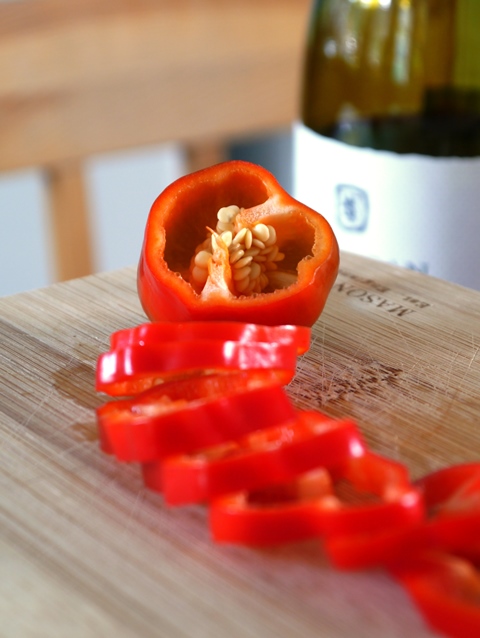
Sliced Cajun Belle Pepper

Cajun Belle

One of the varieties I have grown for the first time this year is Cajun Belle. I wanted a frying pepper, something that I could stuff or chop fairly freely into my cooking that gave a bit of heat, but also acted as a substitute for heat free bell peppers.

Cajun Belle Peppers

Cajun Belle Peppers

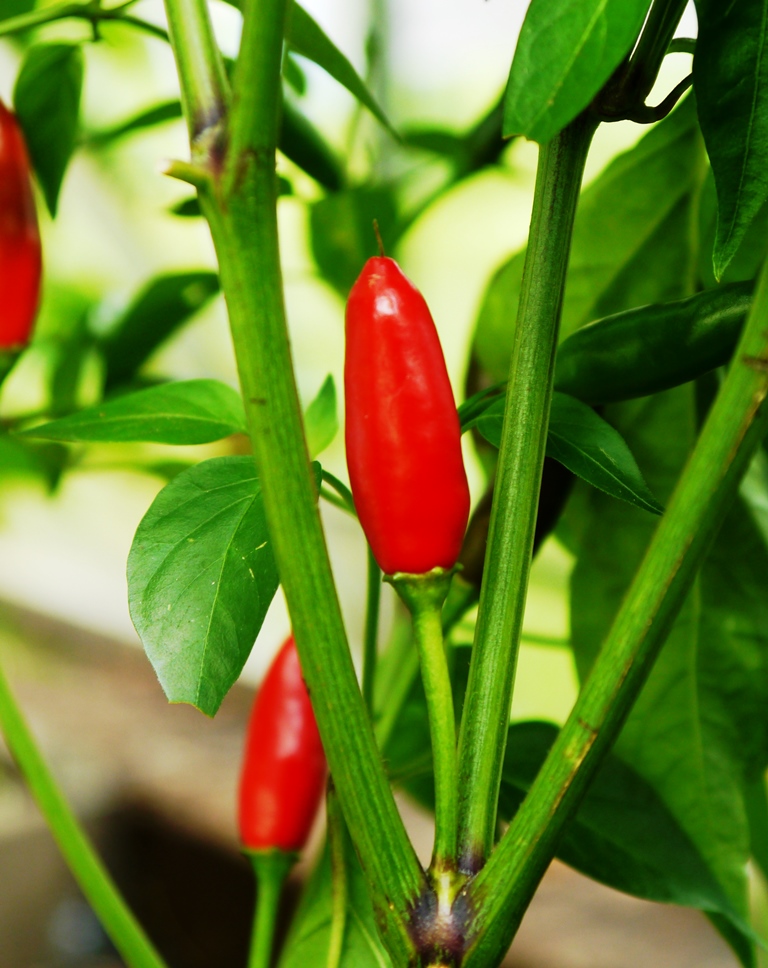
I sampled a few the other day, but today I did the first big pick off of 3 plants. I didn’t pick all of them, only the red ones and a few green. I’d say that currently there is an average of 25 full grown pods on each plant. That is pretty prolific as I’m going to get at least the same again before the year is out. Generally they are 6-8 cm long and 4 cm across so these are really heavy croppers. They look just like mini sweet peppers but quite thin walled and heat-wise they are probably about 3-4000 SHU.

The plants are generally upright and only about 60cm tall, so they are heavily laden with fruit by the time of the first pick and some of the stems need separate support.

Cajun Belle Green

Cajun Belle Green

So my verdict is these are a real winner if this is the type of chilli you want.

  • Quick and easy germination
  • heavy cropper
  • Seed to fruit (green) in 17 weeks (in average greenhouse conditions)
  • Tasty and with a bit of heat
  • Thin walled so the can be easily stuffed

The seeds came from Nicky’s Nursery I would dispute some of the stats on the description there, 61 days to fruit from seed is a bit of a tall order for any chilli. From ‘planting out’ as they say in the USA, maybe, but from seed, I don’t think so, that would have meant picking at the beginning of May for me, which I have never done with any chilli or pepper plant. That said, Cajun Belle is really prolific and I would definitely recommend them, and I will be growing them again next year.
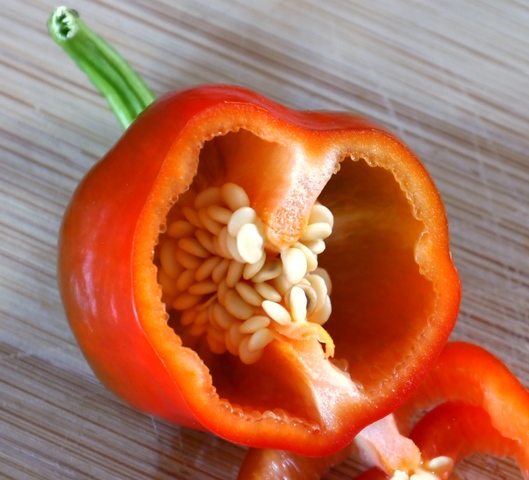
Cajun Belle Chilli Open
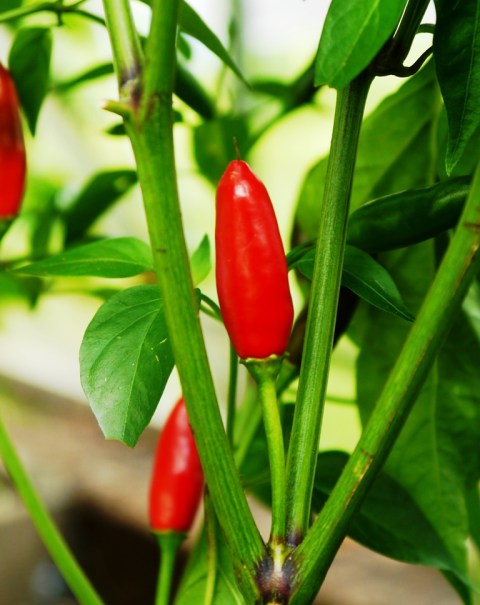
Cajun Belle Chilli Open

Piri Piri

My Giant Piri Piri Plant

I have a soft spot for my Piri Piri plants.  I don’t grow everything every year, I  rotate other plants around and If I have a freezer full of something I might miss a year. It gives me a chance to try new varieties and keeps me interested but I will always have my Piri Piri. Partly this is because they are just the best for overwintering, and partly because they crop so amazingly in the second year.

Nobody sells the seed, my seeds come from my mother’s ‘mother plant’. She first collected the seeds about 20 years ago from a garden in Portugal, and has kept them growing ever since, she has a plant about 15 years old, though I have to say it is a bit ropy now. Because she keeps this one growing, and doesn’t grow anything else so the seed she collects is always true. If anyone wants seeds for a plant like mine I can give them some of hers.

As far as I’m concerned this is THE Piri Piri. There are lots of other chillies that look slightly different all over Africa (chillies were taken to Africa from South America by the Portuguese) that are given this name, but that is simply the name they give to a small hot red chilli, so while the name is the same, the chilli might vary. This is made worse by the fact that where chillies are grown for Piri Piri sauce, they tend to choose something that is quick growing and prolific, then brand it with the Piri Piri name afterwards.

Anyway, back to my plant, the one below is now 5ft (1.5m) tall, and it will get bigger by the end of this year. It is a second year overwintered plant, last year it got to about 4ft (1.2m).

Piri Piri Plant

My 5ft Piri Piri Plant


These are great for overwintering. They are much more tolerant to cold temperatures than most capsicums, they will die back to stems, but this spent a few months last winter in a cool greenhouse with temperatures down to 0°c on a couple of nights. Last winter was a very mild one though (South Devon). Normally I wouldn’t expect plants to survive in the greenhouse, and nothing else that I left in there did.

Also, if frost hits in the autumn this one will survive where others don’t. According to my experiments nothing else will out-survive it apart from the tepin or Chiltepin, which are even more hardy, but pretty useless as a fruiting plant. This one pays dividends everywhere.

Piri Piri Flower

Piri Piri Flower

After winter it lays dormant for longer compared to other types. When I keep other plants they tend to start shooting out very soon after midwinter, and by early February they are shooting nicely. Not with this Piri Piri; maybe because the stems are quite woody, and it is a slow growing plant anyway,  you have to have faith and wait a bit longer, but it will catch up and still fruit earlier than first-year plants.

the chillies you pick will be pretty hot, I recon about 80-100,000 SHU, and off a big plant like this one I am expecting hundreds of them. They will be used for everything, dried, powdered, sauced and pickled.

Piri Piri Green

Piri Piri Green


Piri Piri

Piri Piri


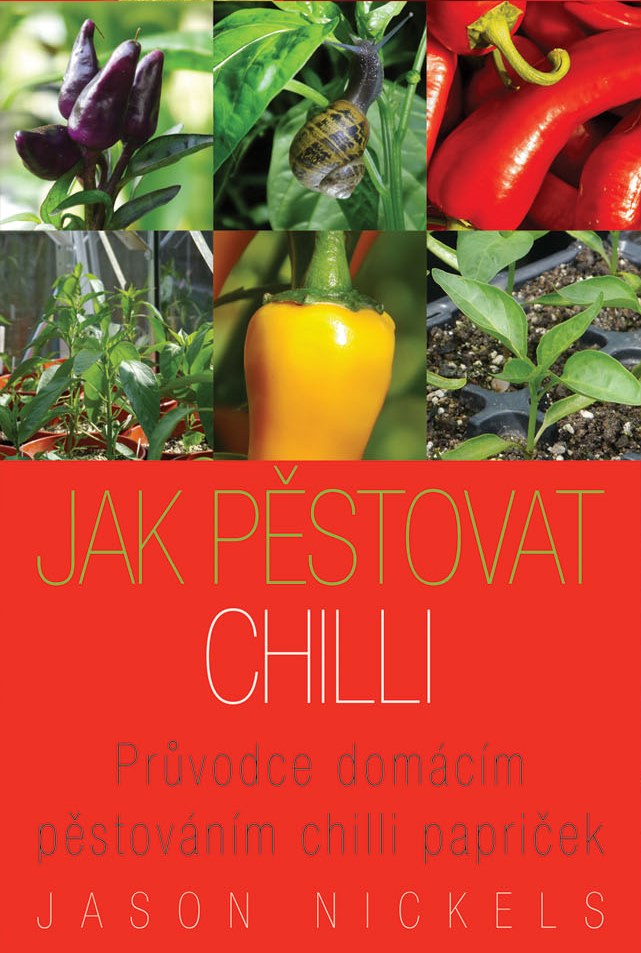
Jak Pestovat Chilli

Growing Chillies Book is now published in Czech language


Dobrá zpráva pro milovníky chilli. ‘Jak Pestovat Chilli’ Nyní v českých knižních obchodech.

I’m not sure if there are ever any readers of these pages who are speakers, or indeed readers, of Czech, but if you are then Growing Chillies Book, or should I say ‘Jak Pestovat Chilli’ is in a bookshop near you! Of course this is a bit of a catch 22, if you can read this, you may not need a Czech translation, but if you do, you can link to the details here –  www.pestujchilli.cz You can order it online or buy it through bookshops.

I will be visiting Czech Republic for the weekend of 5th & 6th September to do some book signing and talk at a chilli festival there; more details to follow soon.

Jak Pestovat Chilli

Growing Chillies Book, now translated into Czech

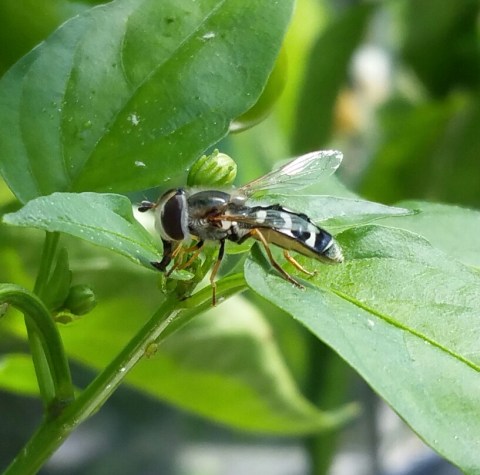
Hoverfly laying eggs on a chilli plant

Hoverflies, Predators of Greenfly

The most commonly talked about predator of greenfly is ladybirds, you can buy them online, or collect them from around the garden, often on stinging nettles, which are themselves riddled with greenfly.

Just as effective, and just as common, if not more so, are hoverflies. The flies themselves usually feed off of plant nectar, but the larvae of many hoverfly species feed on greenfly along with other aphids, thrips and any other small insect they can get their teeth into.

I have a few more greenfly than usual in the greenhouse this year, but today I noticed that the battle has turned against them. I have left the doors wide open in the last few days in the hope that some predators might come in, even at night, which means I risk moths coming in, and that means caterpillars. Sometimes the line between good and bad is a fine one.

I discovered a new way of finding greenfly, just watch where the hover flies go. I have never watched them this closely before.

Update – For a bit more on greenfly detection have a look at this later blog entry.

Hoverfly laying eggs on a chilli plant

Hoverfly on chilli plant

This chappy (chappess actually) hovered around the plants from shoot to shoot, only stopping at the ones which had greenfly in the tips.Here you can see her sucking on a leaf, maybe one that is covered with the sweet sticky dew that the greenfly exude, this is also the stuff that ants love. I couldn’t get a picture of her next move, which was to reach in with her back end and lay an egg among the greenfly. One egg laid, then on to the next shoot. Only the shoots with a greenfly benefited from an egg, so hopefully in a day or two a tiny larvae will emerge on each and start munching. They grow quite quickly so in a few days I will have a picture of one. Watch this space.

Greenfly on Chilli Flower

Hidden Greenfly Damage

Most people know the common reasons why we shouldn’t let greenfly run amok over our chilli plants, they suck it dry of sap and nutrients and they spread disease. One other big problem with greenfly is that they ruin fruit. Malformed fruit is a fairly common problem on chillies and other factors come into play such as environmental conditions, genetics, and diseases, but problems resulting from greenfly damage are often not credited as such because they occur long after the greenfly have gone.


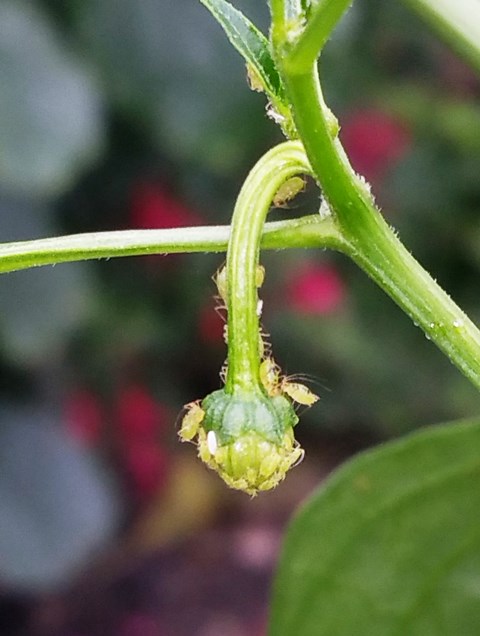
Greenfly on Chilli Flower

Greenfly on chilli flower

The above picture shows how they enjoy getting their beaks into the soft flesh of a flower, often the flowers and new shoots are the first parts of a plant to be attacked because they are the most tender and succulent. Once this flower opens they will get inside and feed of the reproductive parts of the plant and the tiny chilli before it has even developed. This results in scar tissue from where they pierced the flesh and the outcome is a chilli that is split, or misshaped. You can see this in the picture below.

Greenfly damaged Chilihuacle Negro Chilli

Greenfly damaged Chilihuacle Negro Chilli


Now the Chilhuacle Negro is an odd chilli anyway, the skin is always matt coloured and leathery, even when it is fully ripe (when it turns brown) and it is never smooth and round, but you can see here that secondary fruits have formed close to the calyx (where it joins the stem). On the right hand one these aren’t even closed, they are split open and you can see inside. Whilst still edible, this will probably start to rot before it ripens, and if you were a commercial farmer it certainly wouldn’t be of a quality that you could sell.

The answer to this problem is that as soon as you see evidence of greenfly, usually the feathery white skins on the leaves below, check your flowers. It is difficult to get at the greenfly inside and crush them without damaging the flowers, so you can use an organic spray, but I think it is best to nip off the flowers while they are young so the plant doesn’t waste its resources growing useless fruit. It will soon grow more flowers,usually they produce many more flowers than fruit anyway, and it ensures you get rid of your greenfly and leave the plant producing a healthy crop.

I have had more problems than usual with greenfly this year, but as documented in a previous blog, by far the worst affected have been the Chilhuacle Negros, these fruits must have come from the first flowers be hit, before I even saw them, and I have picked a few fruits like this now. You can never be too diligent!